2026, Capstone Fashion Collection
Advised by Dr. Jinku Kim. Special thanks to Dr. Dan Novy and Professor Michael Burton for their expertise, Charlotte Kramer for modeling and helping with exhibit design, and John Horwath for documentation
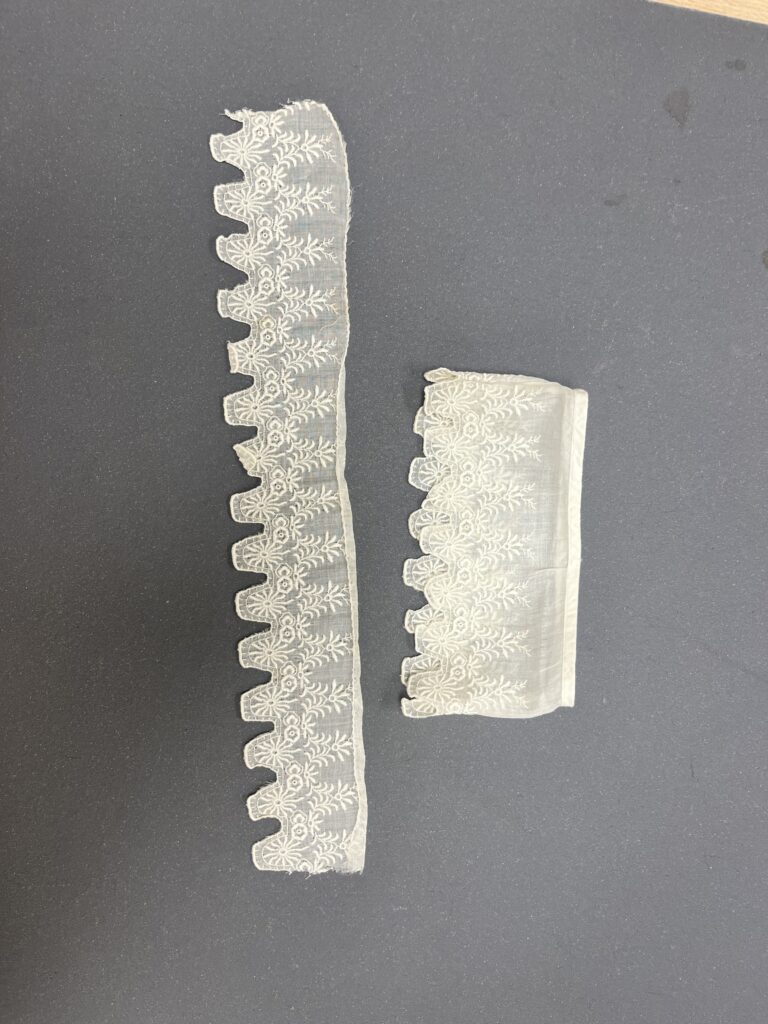
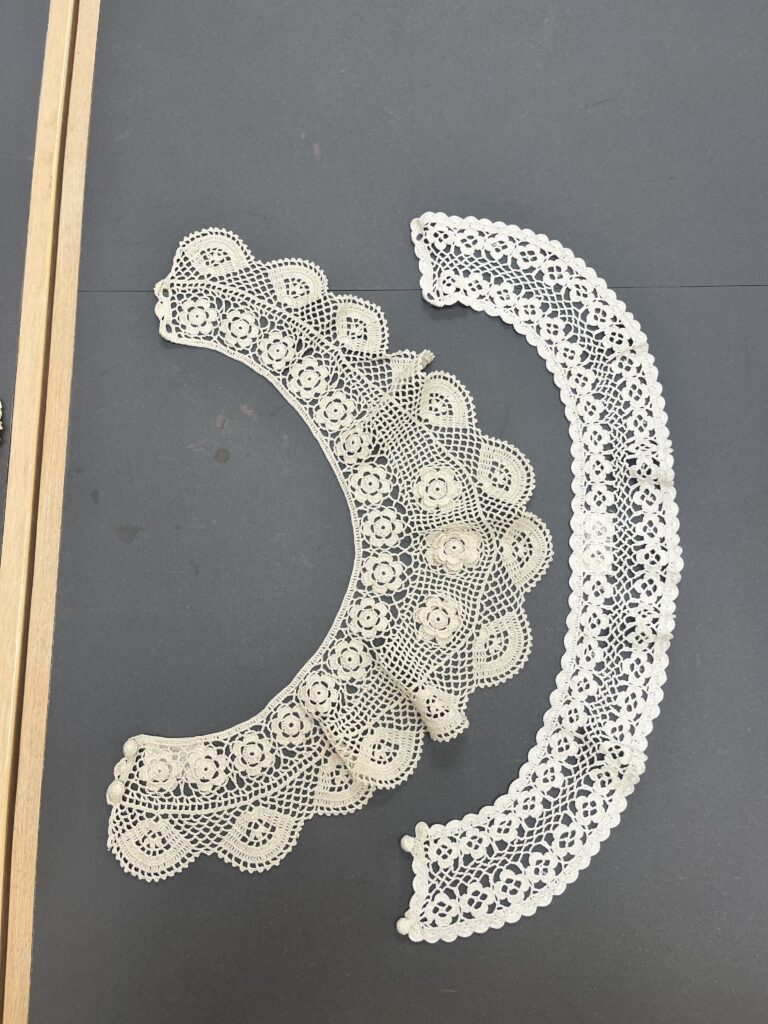
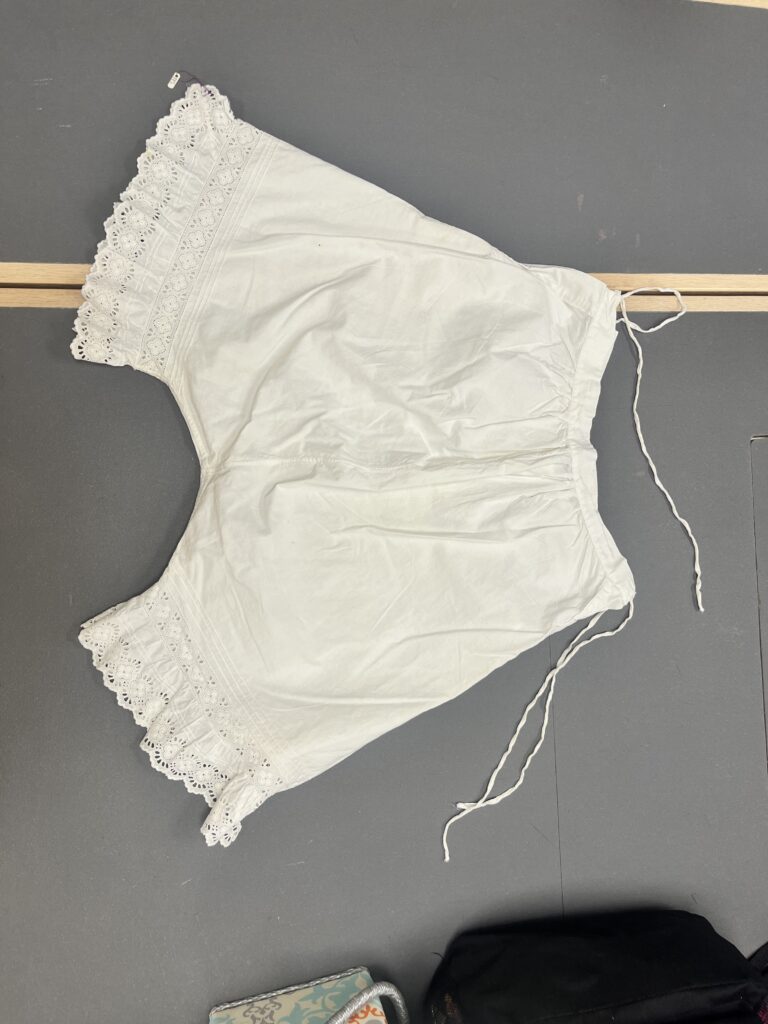
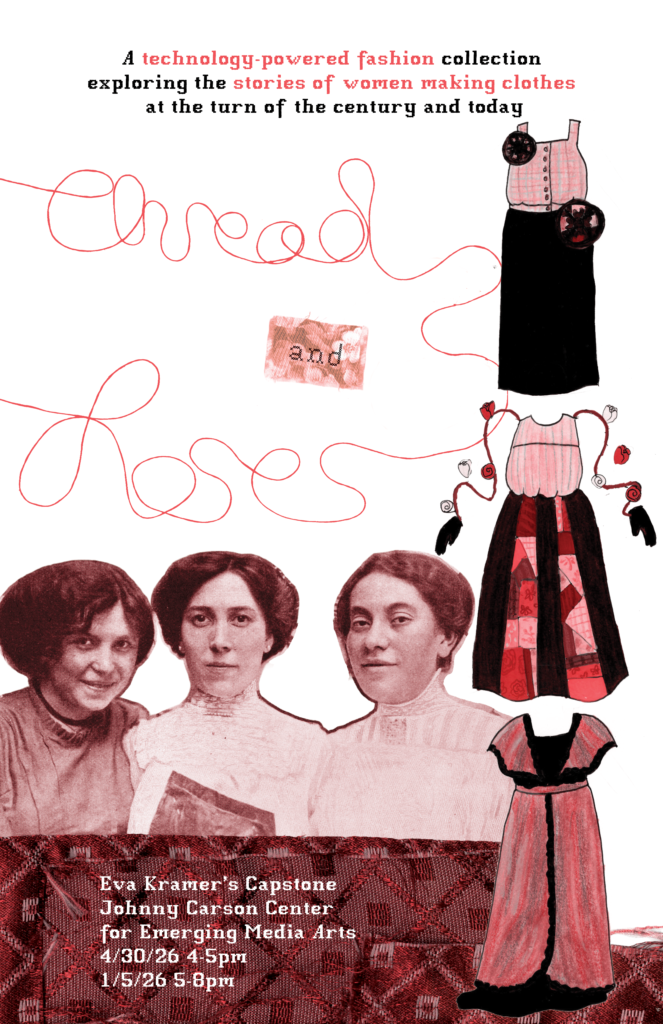
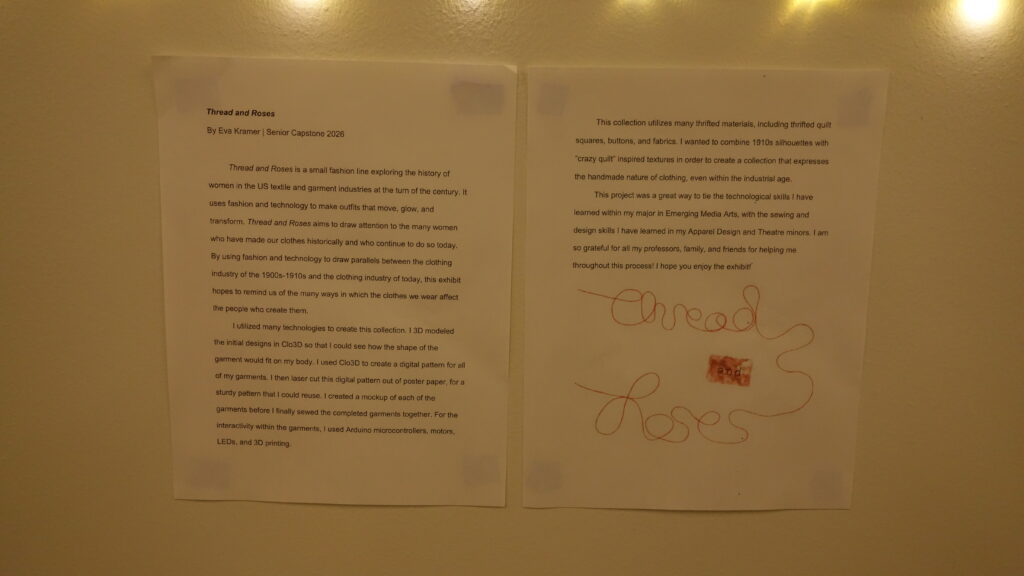
A fashion collection examining the history of women in the United States’ textile and garment industries in the 1900s-1910s. The garments in this collection use motors, LEDs, and microcontrollers in order to bring the garments to life. This collection was meant to combine the skills in emerging technology, fashion, and storytelling I had learned throughout my time in college. I wanted to shed light on the work of women in textiles in the past and the present and inspire audience member to take actions to help garment workers today.
The Process
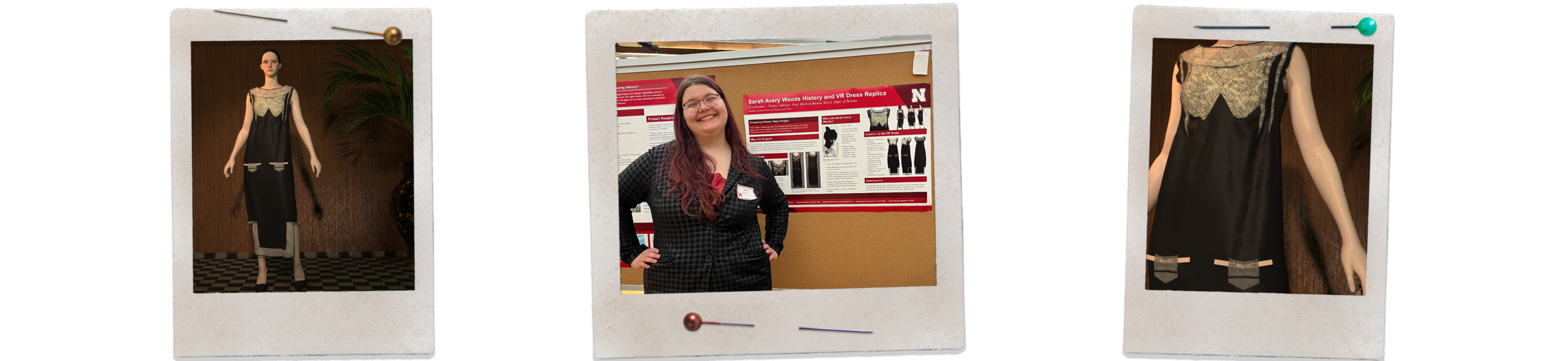
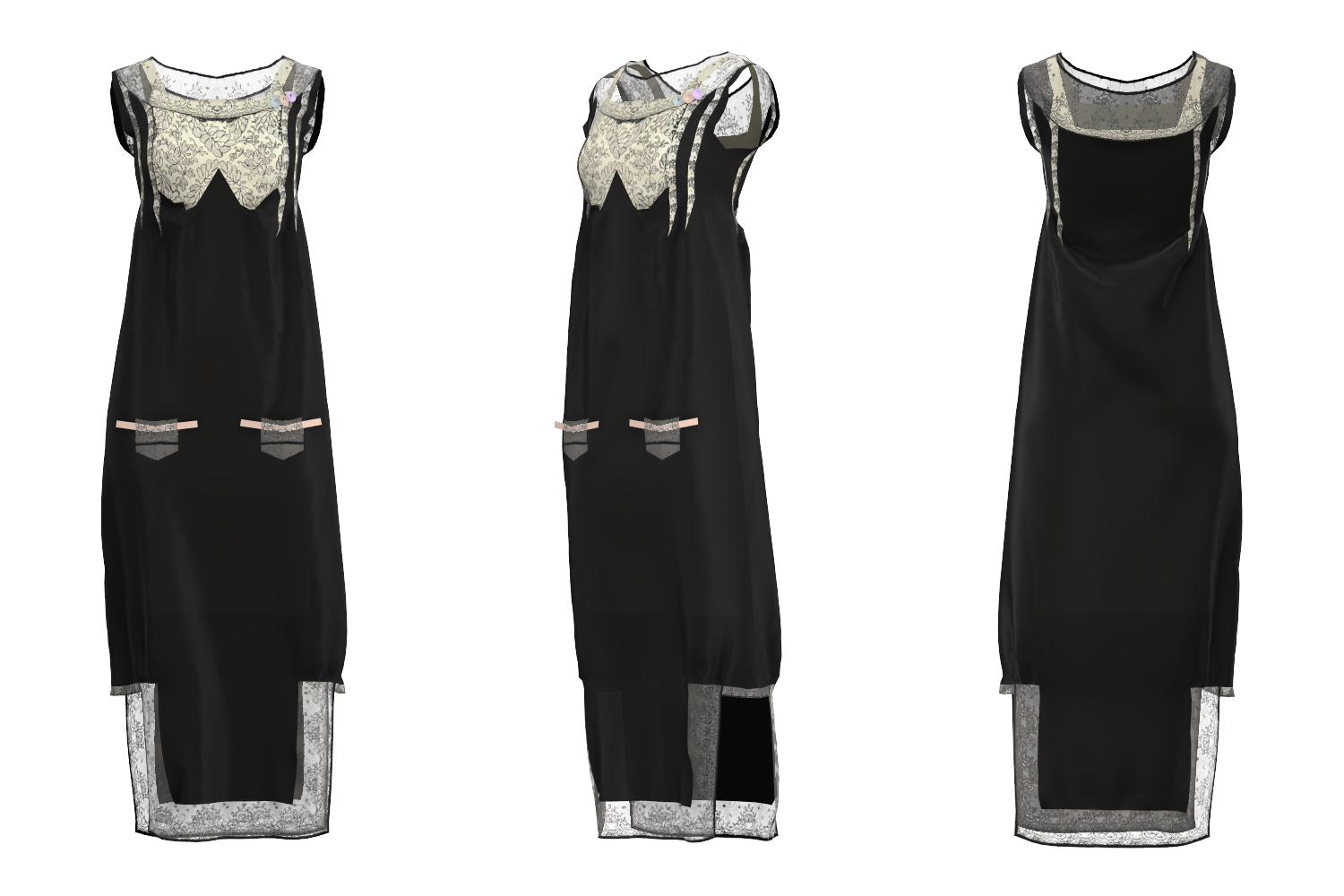
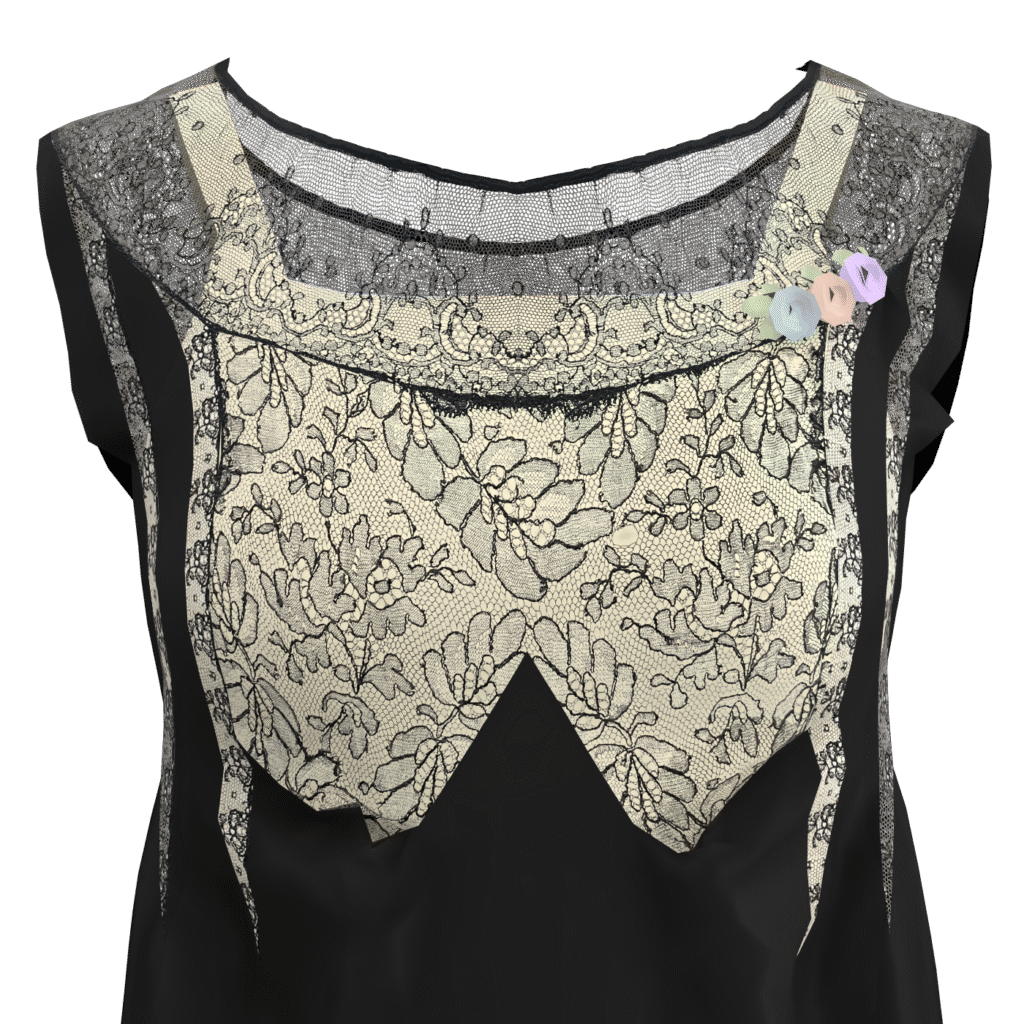
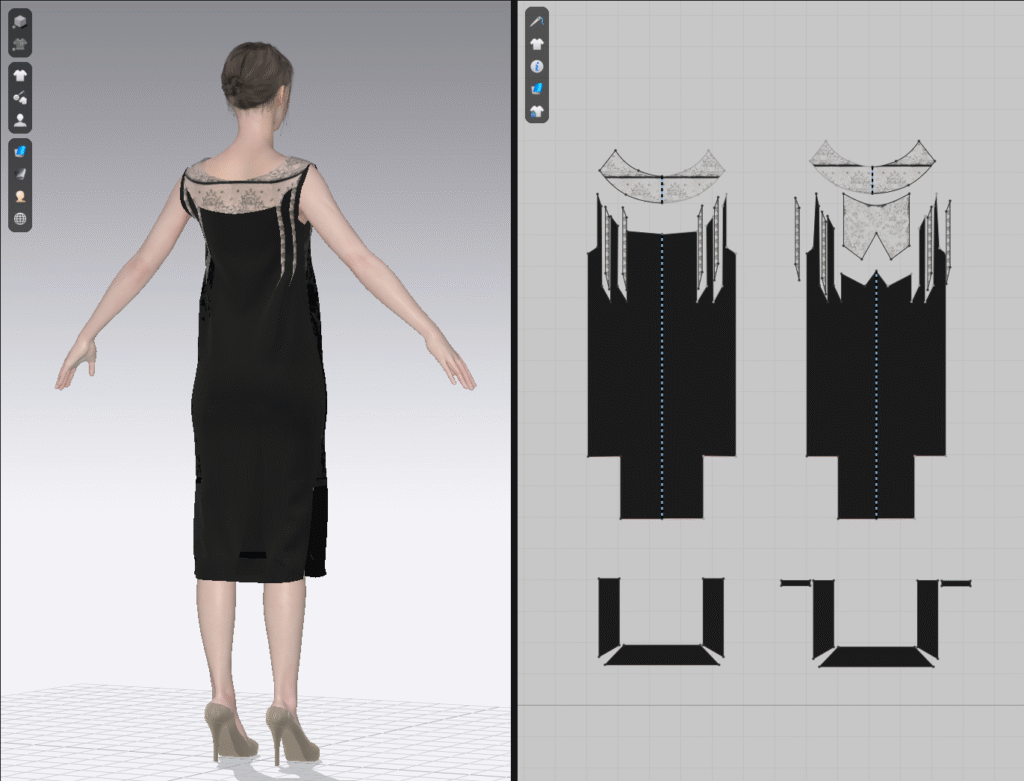
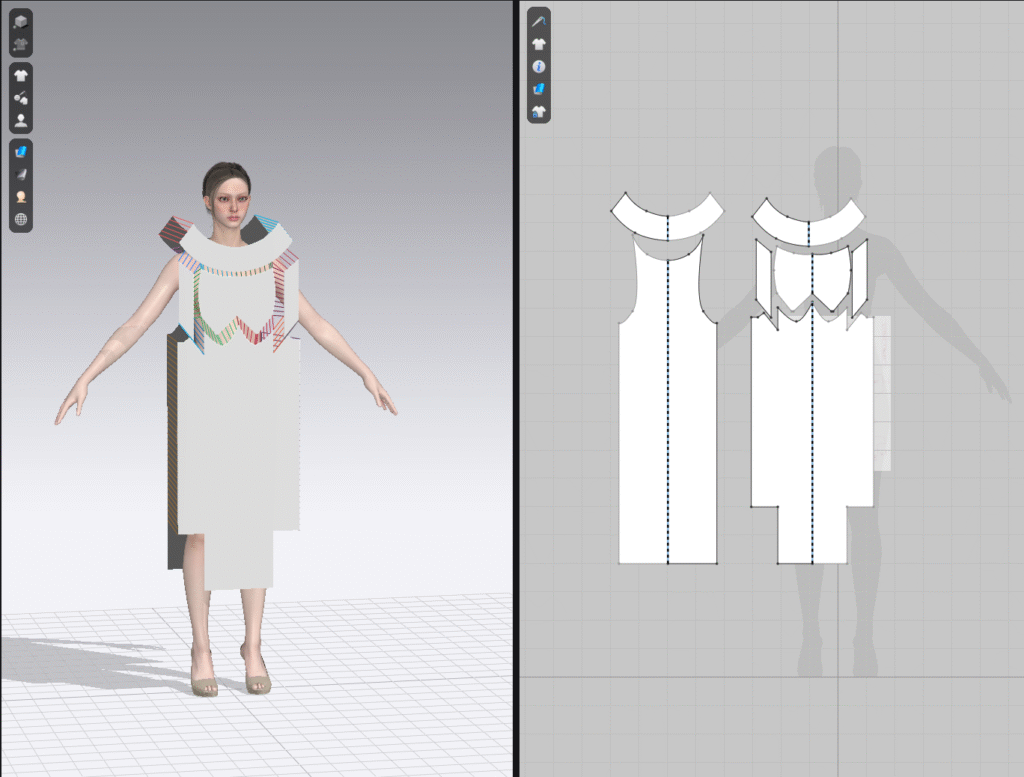
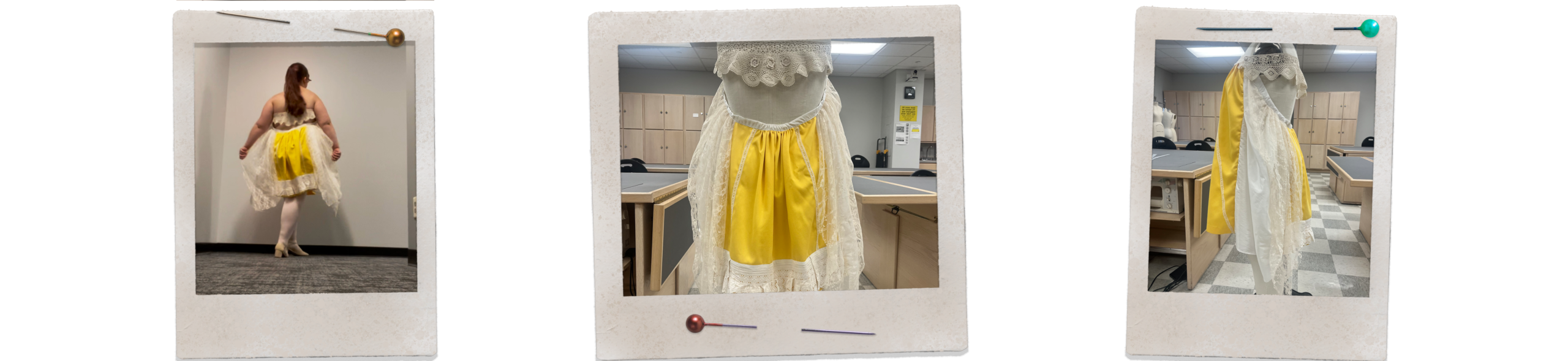
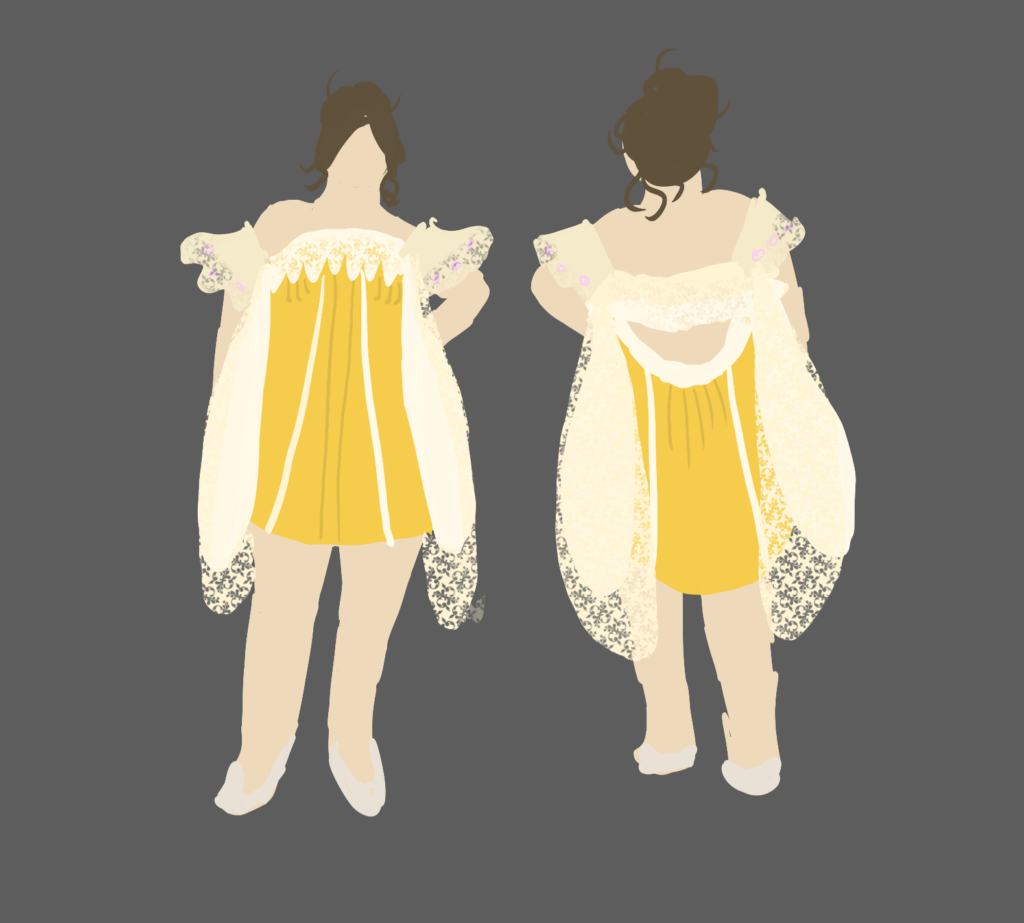
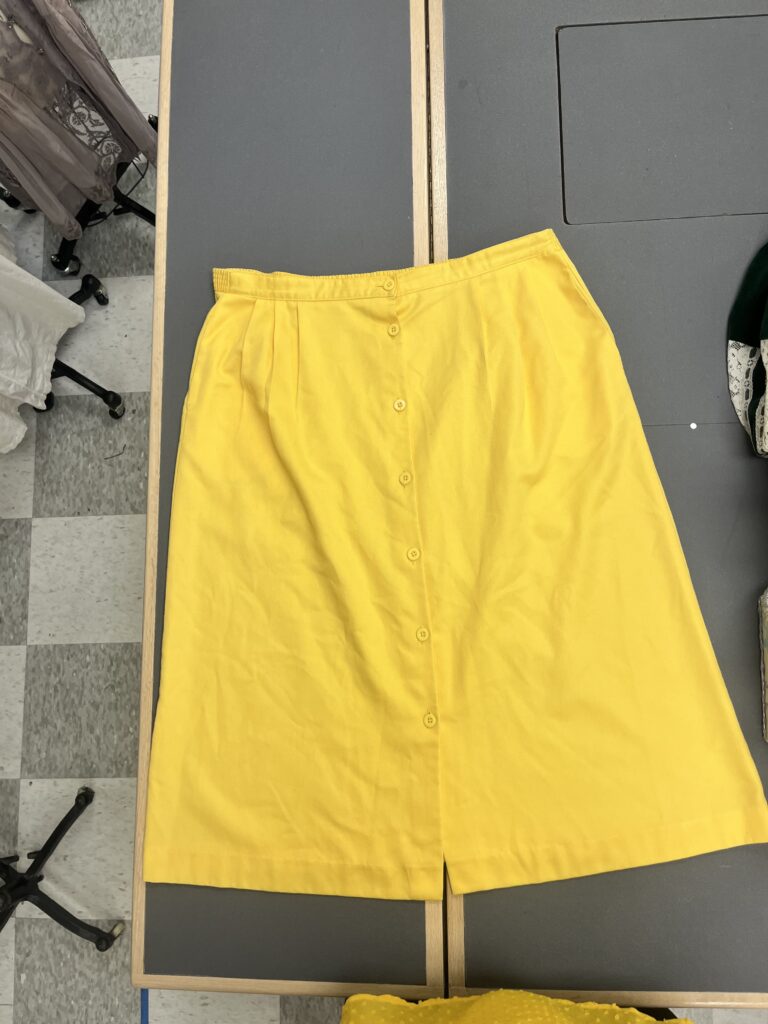
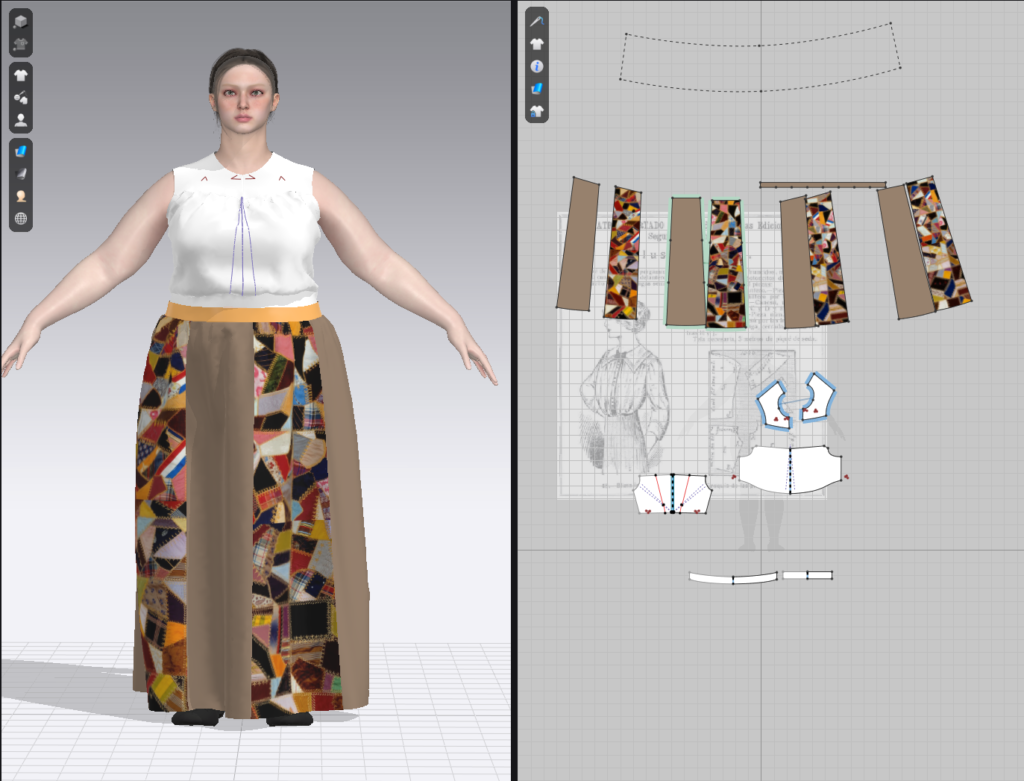
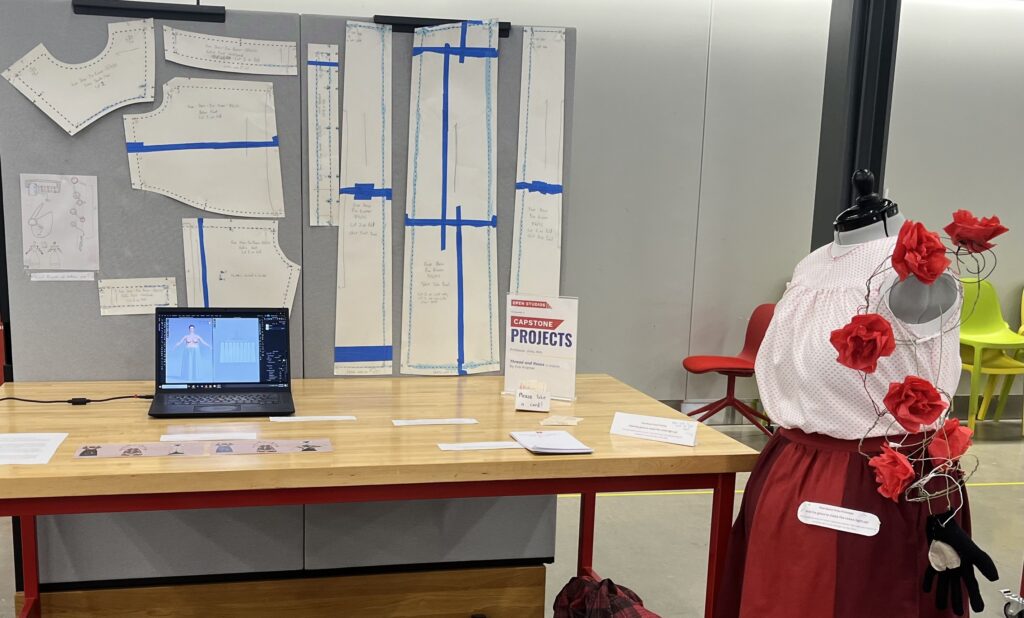
For the textile portion of the project, I started by designing the garments – taking inspiration from the style of the early 1900s. I then used Clo3D to model the garments to fit my precise measurements. This allowed me to experiment with patterning with minimal material waste. I then laser cut the patterns and did final physical mockups using thrifted materials. I used both domestic and industrial machines when creating the final garments. I utilized “crazy quilting” and appliqué techniques to emphasize the hand-crafted aesthetic I wanted the collection to have.
Meanwhile, I was also working with Arduino IDE and Arduino UNO and Flora microcontrollers in order to create technology-powered outfits. I also utilized LEDs, DC motors, and servo motors in order to realize my vision.
The Collection
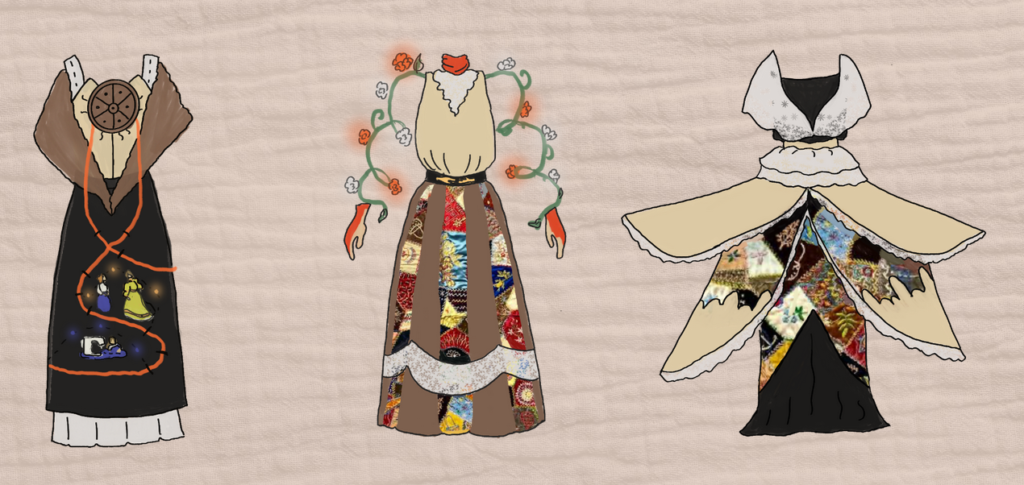
With lots of trial and error, I landed on three ideas that helped tell the story of garment work in the 1910s.
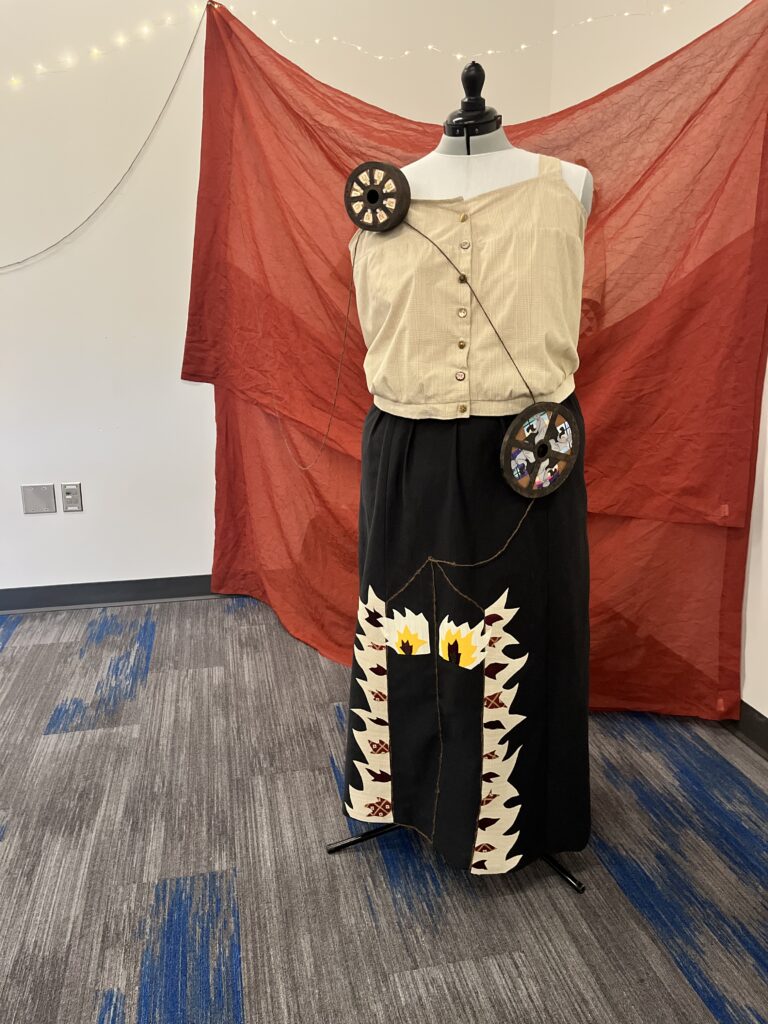
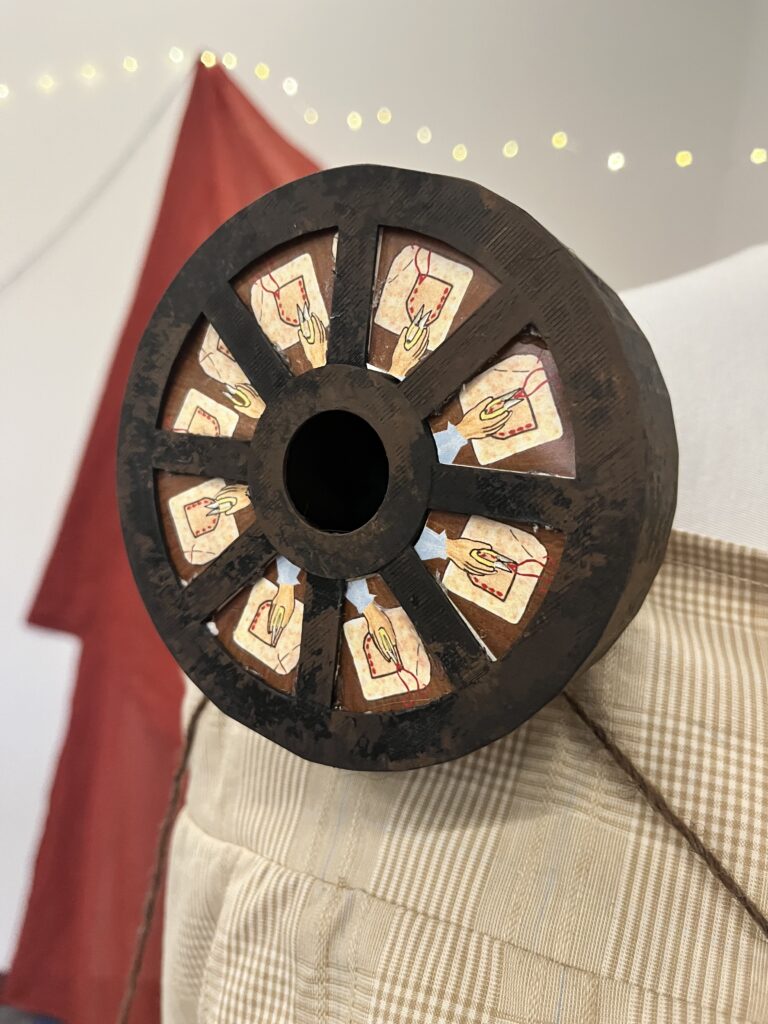
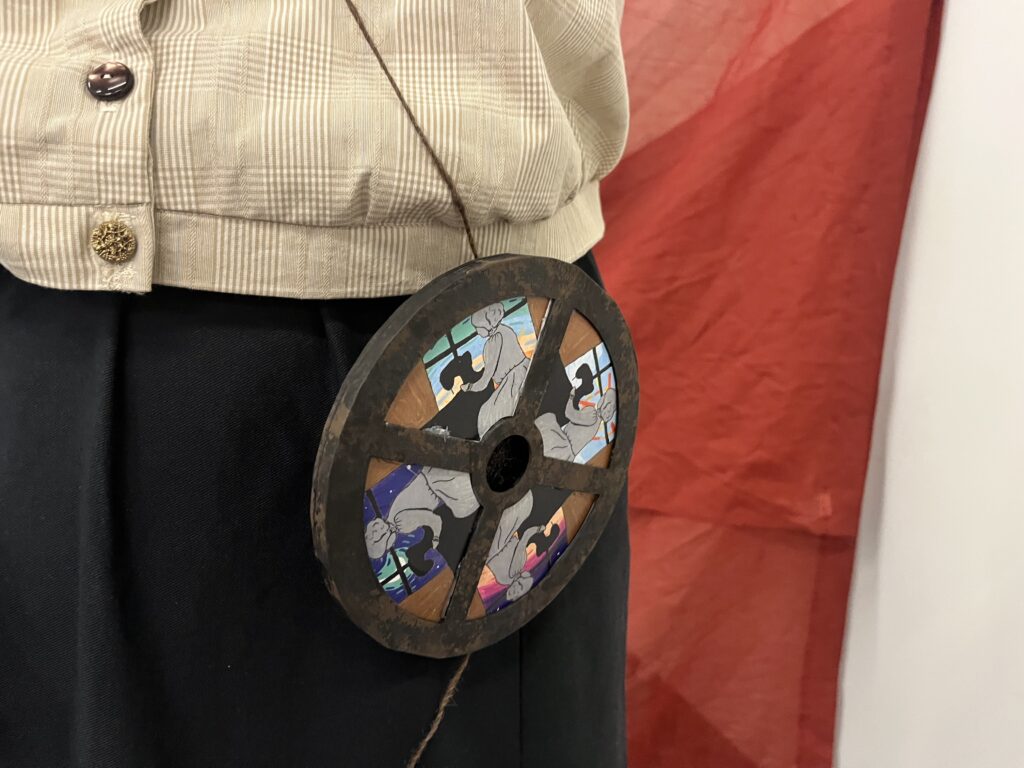
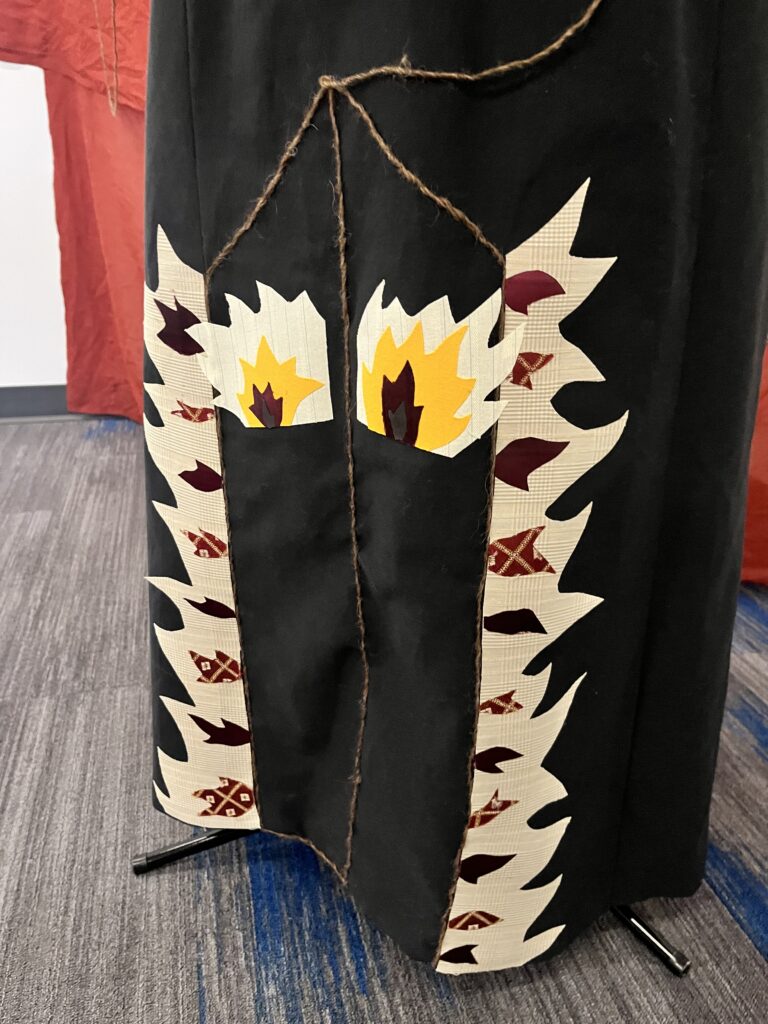
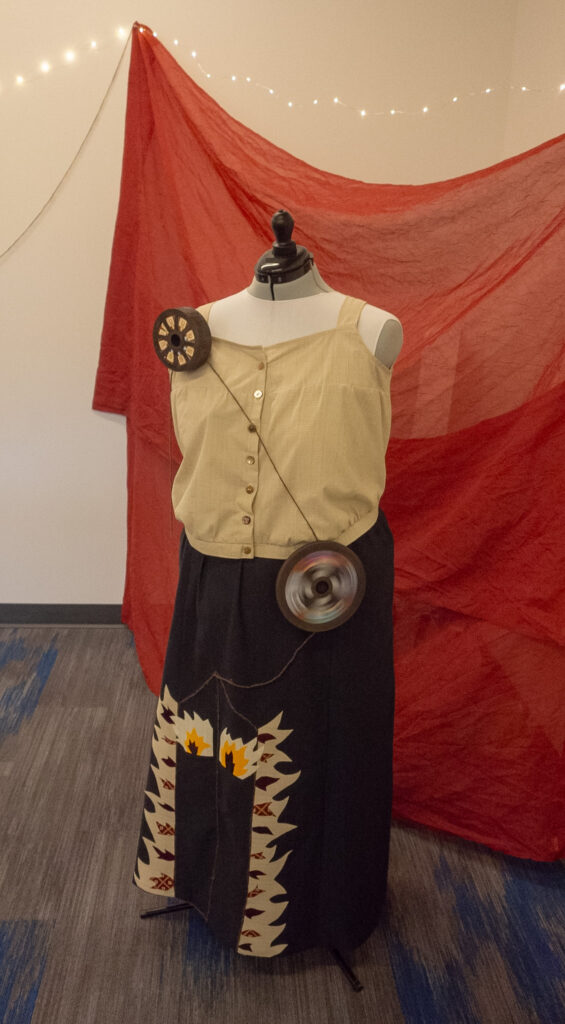
First, I designed an outfit to represent the dangers the girls faced. It has rotating wheels attached to a skirt and shirt. Both wheels have scenes of garment work on them, one representing the practice of piecework and one representing the long hours women were forced to work. The skirt has a representation of the Triangle Shirtwaist Factory Fire appliquéd on it.
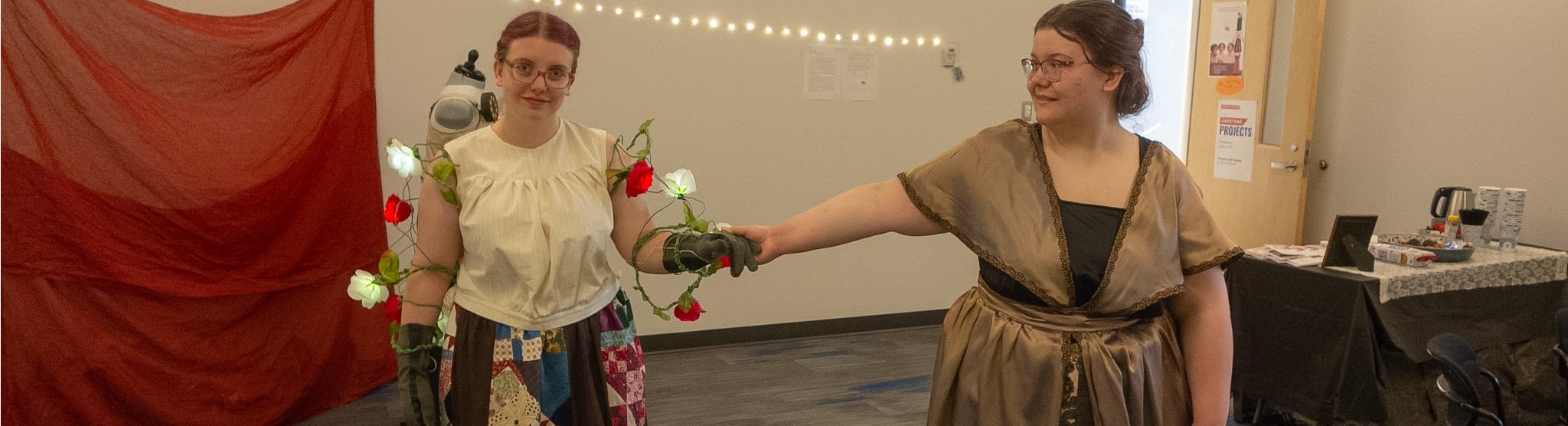
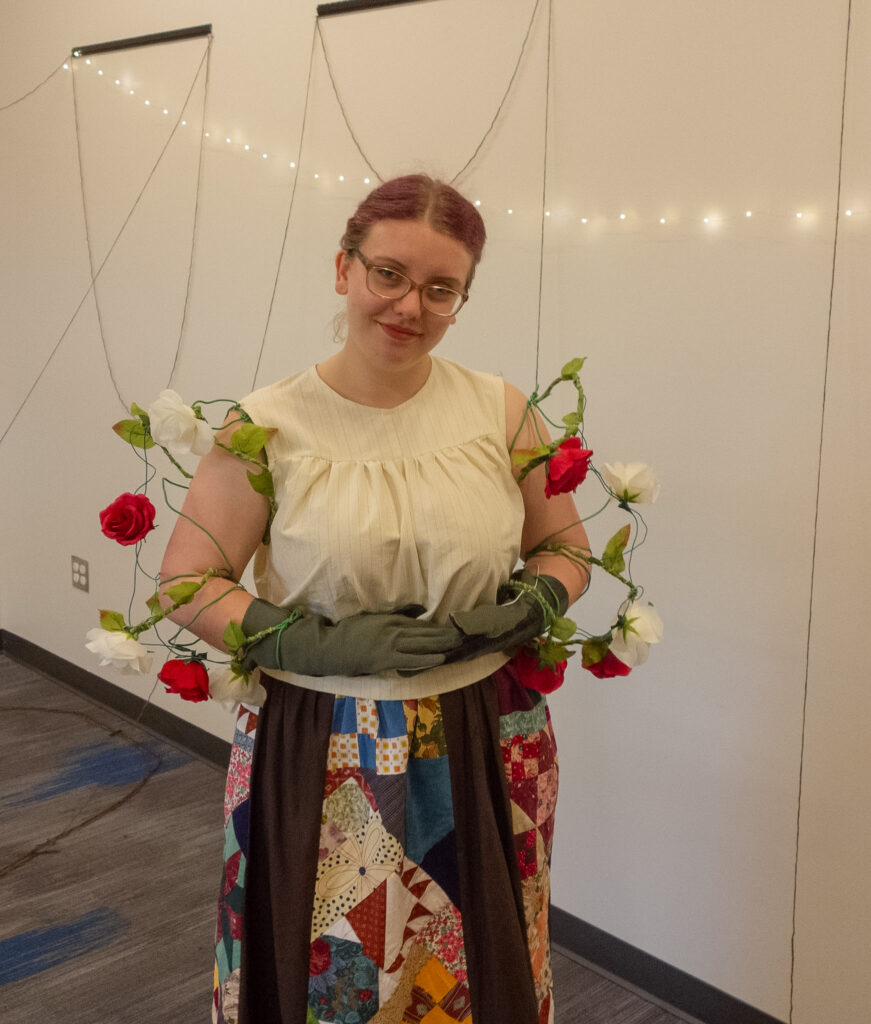
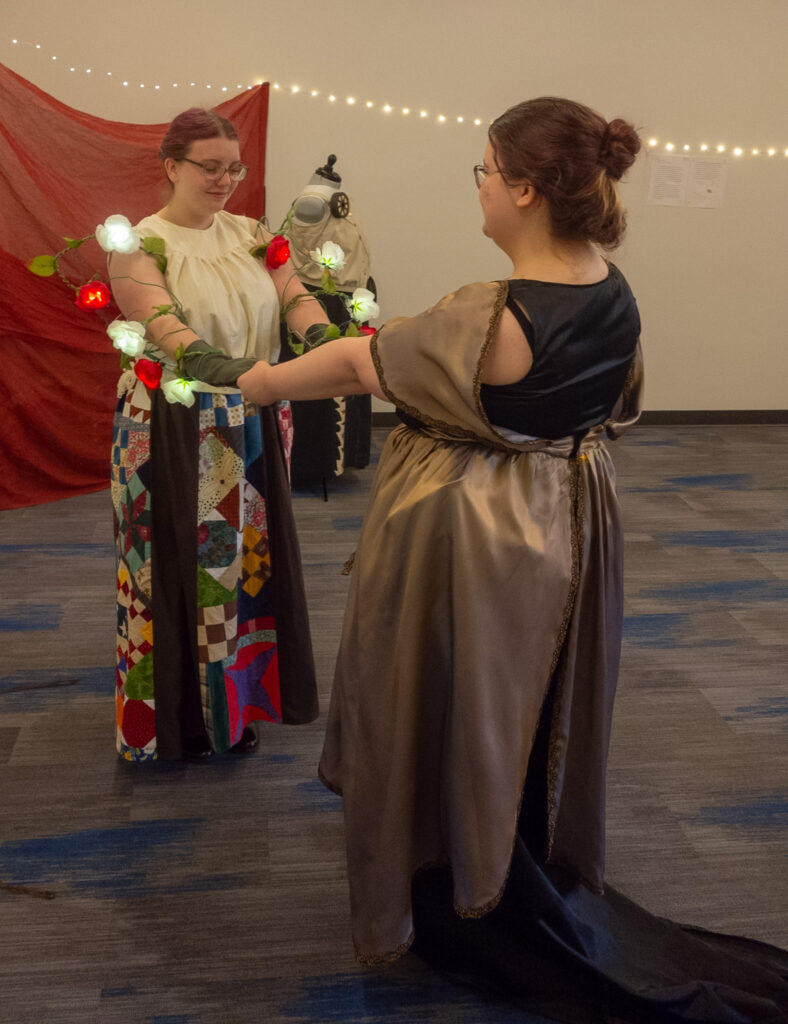
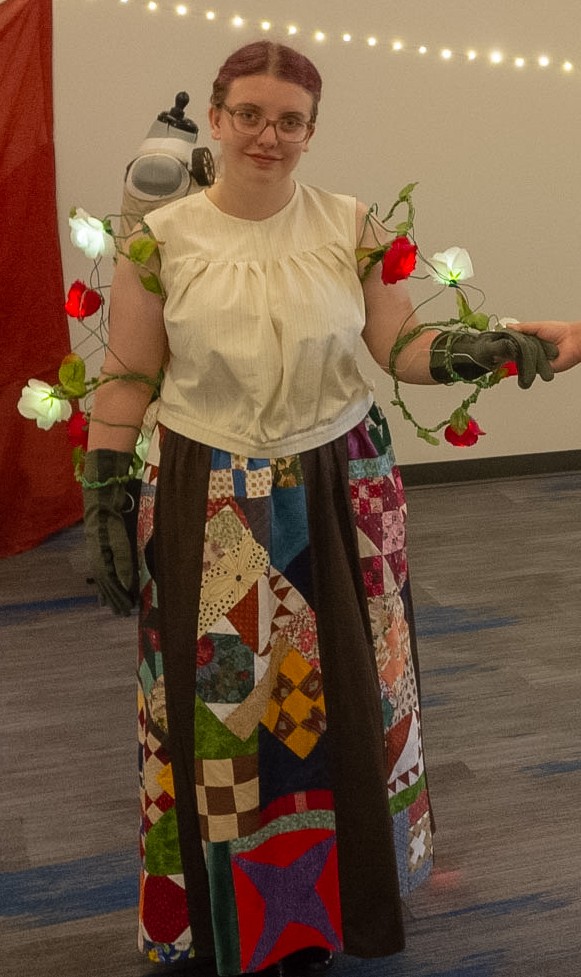
Next, I wanted an outfit which explored the way women fought back against this maltreatment. This outfit consists of a “crazy quilted” skirt, and a shirtwaist with light up sleeves. These sleeves are powered by a touch capacitive sensor, meaning that they begin to glow when the audience member holds hands with the model. This is meant to represent the power of unity in the garment workers’ fight against oppression.
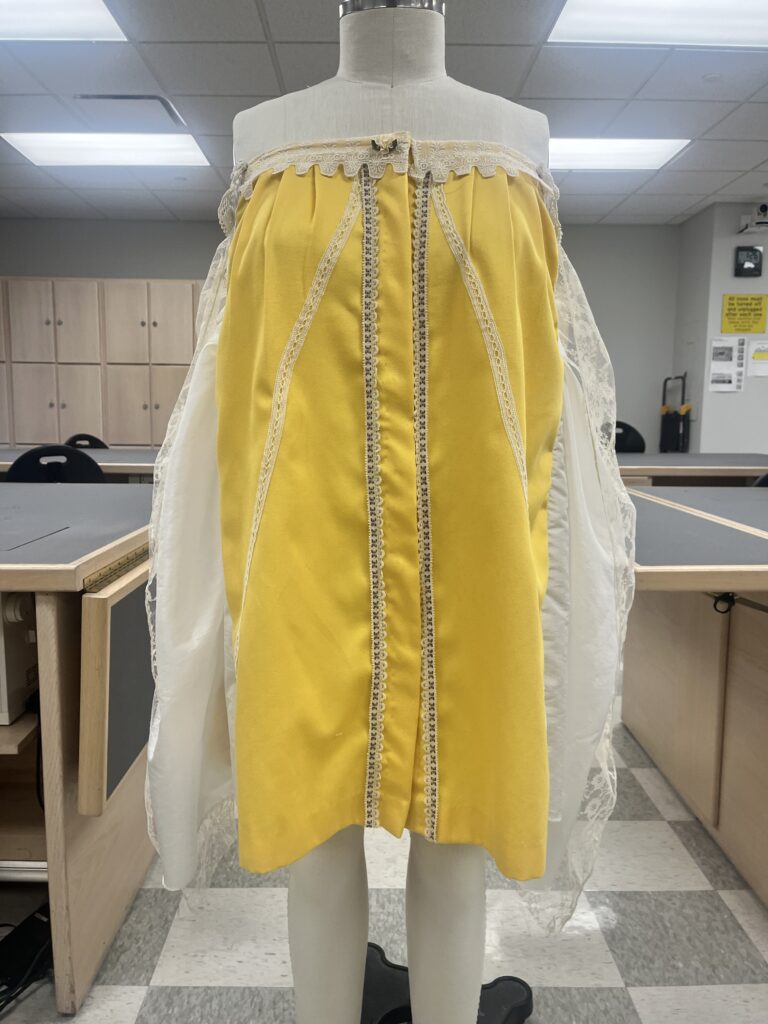
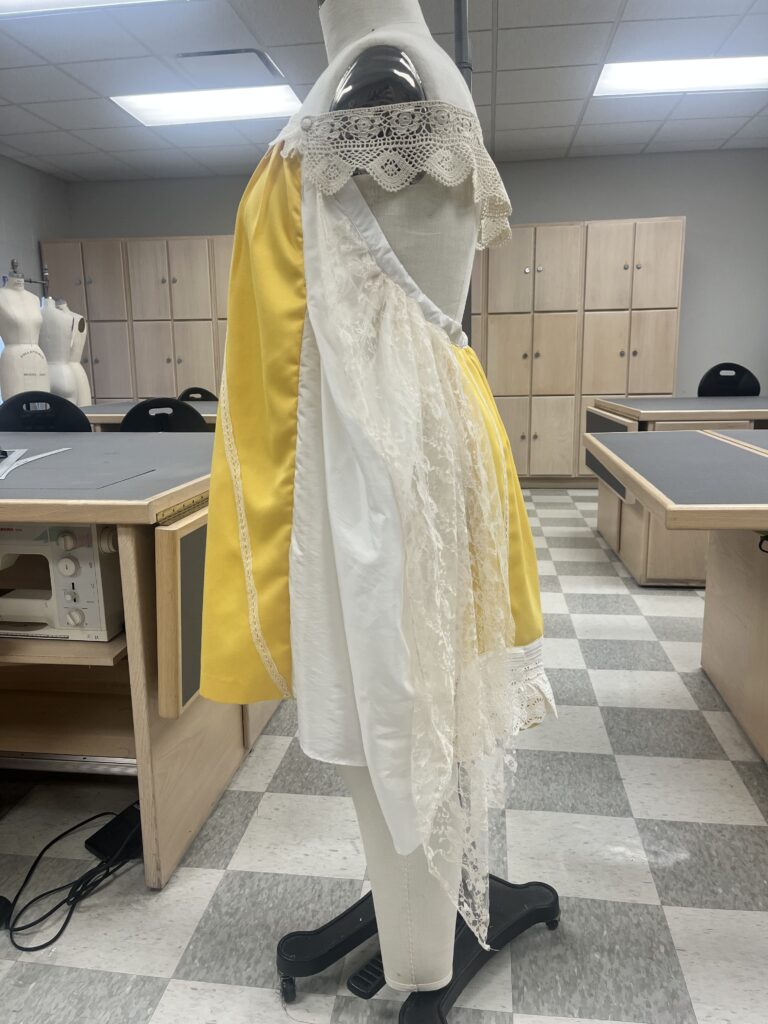
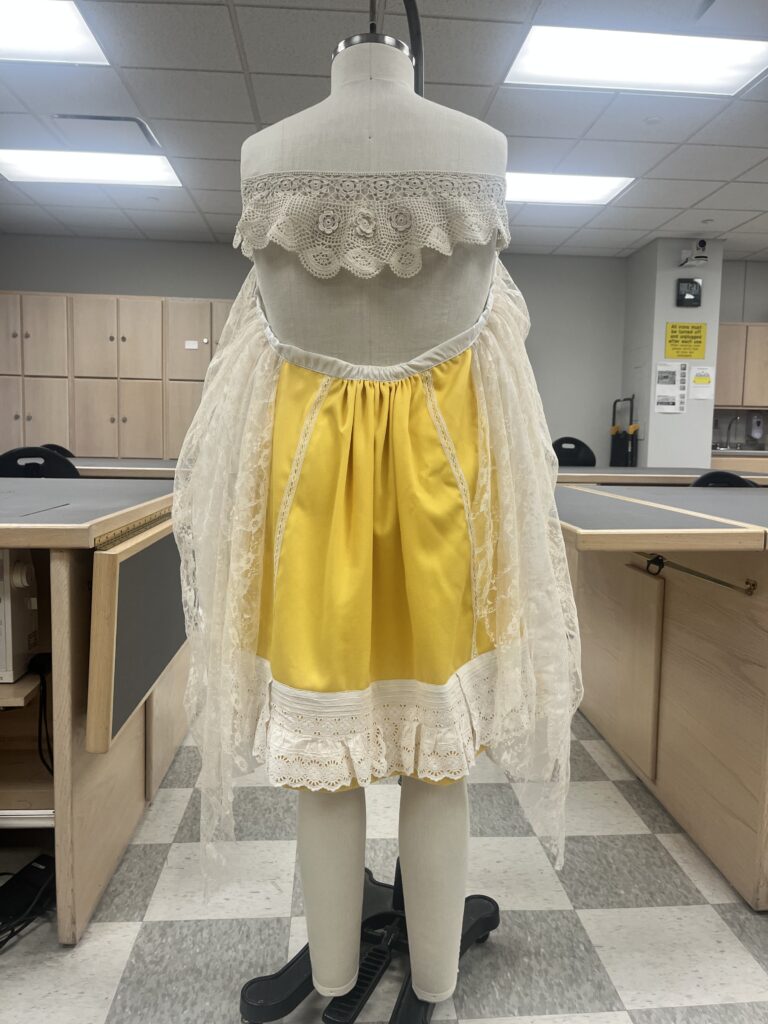
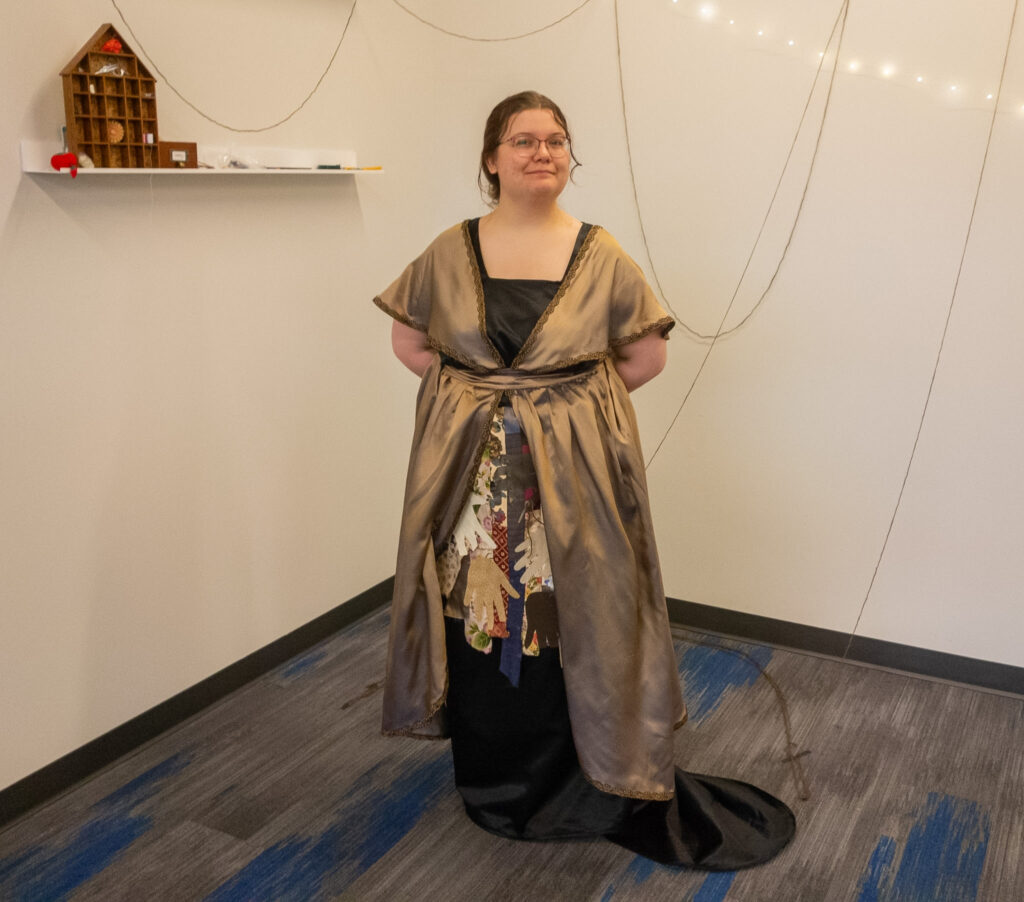
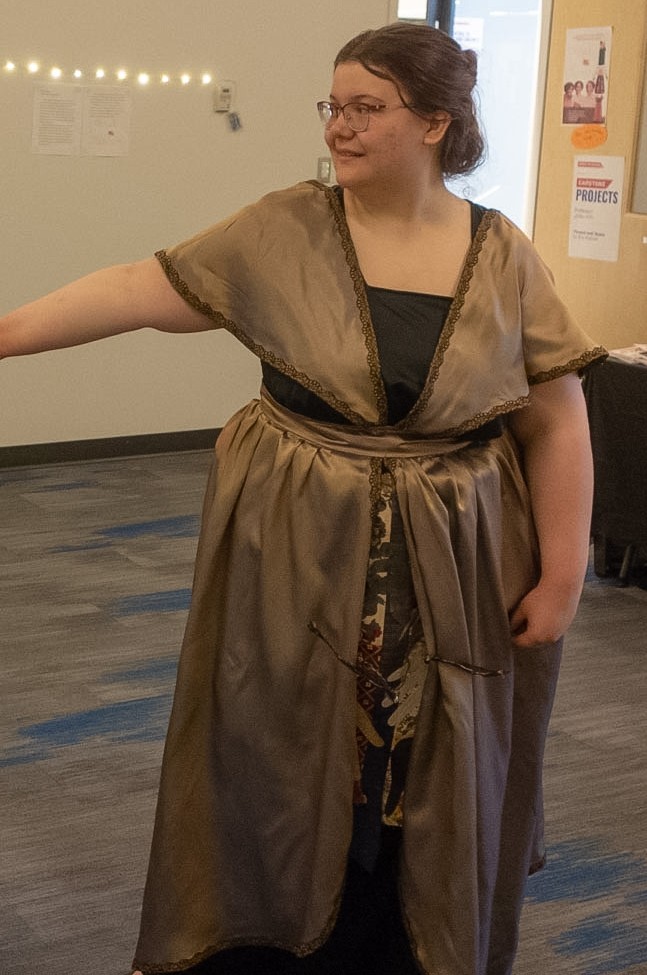
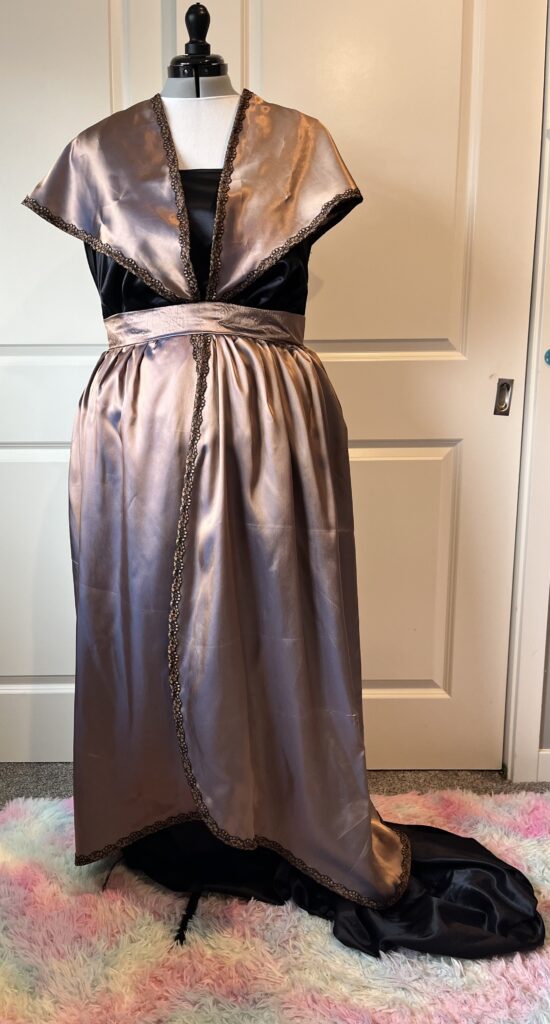
Finally, the last dress investigates the relationship between the clothing consumer and the clothing creator both in the past and today. This outfit consists of an elegant dress and overdress. The overdress uses servo motors and a wire skeleton to lift up at the touch of a button to reveal a patchwork design honoring the many people who create each and every one of our clothes.
The Zine
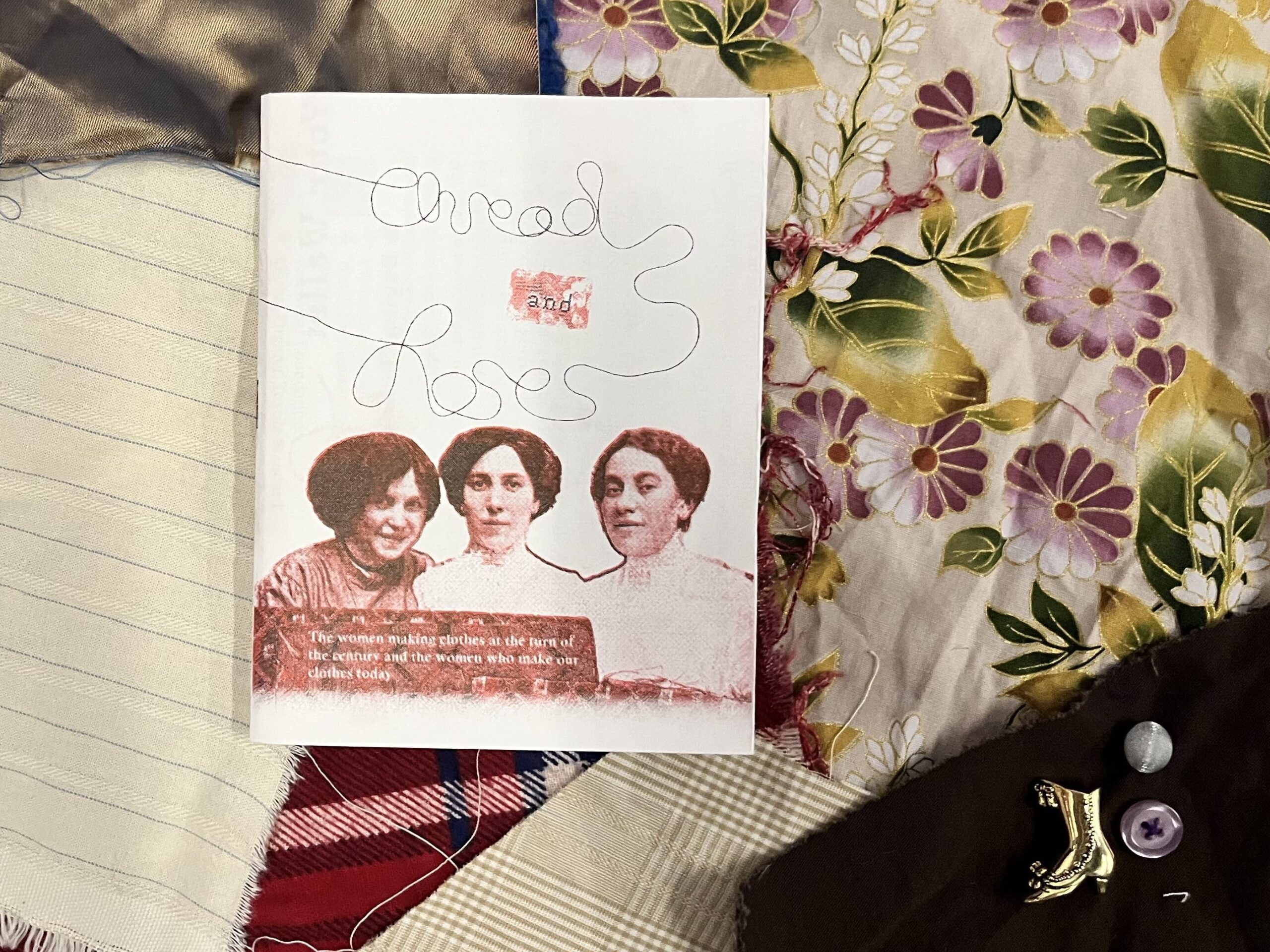
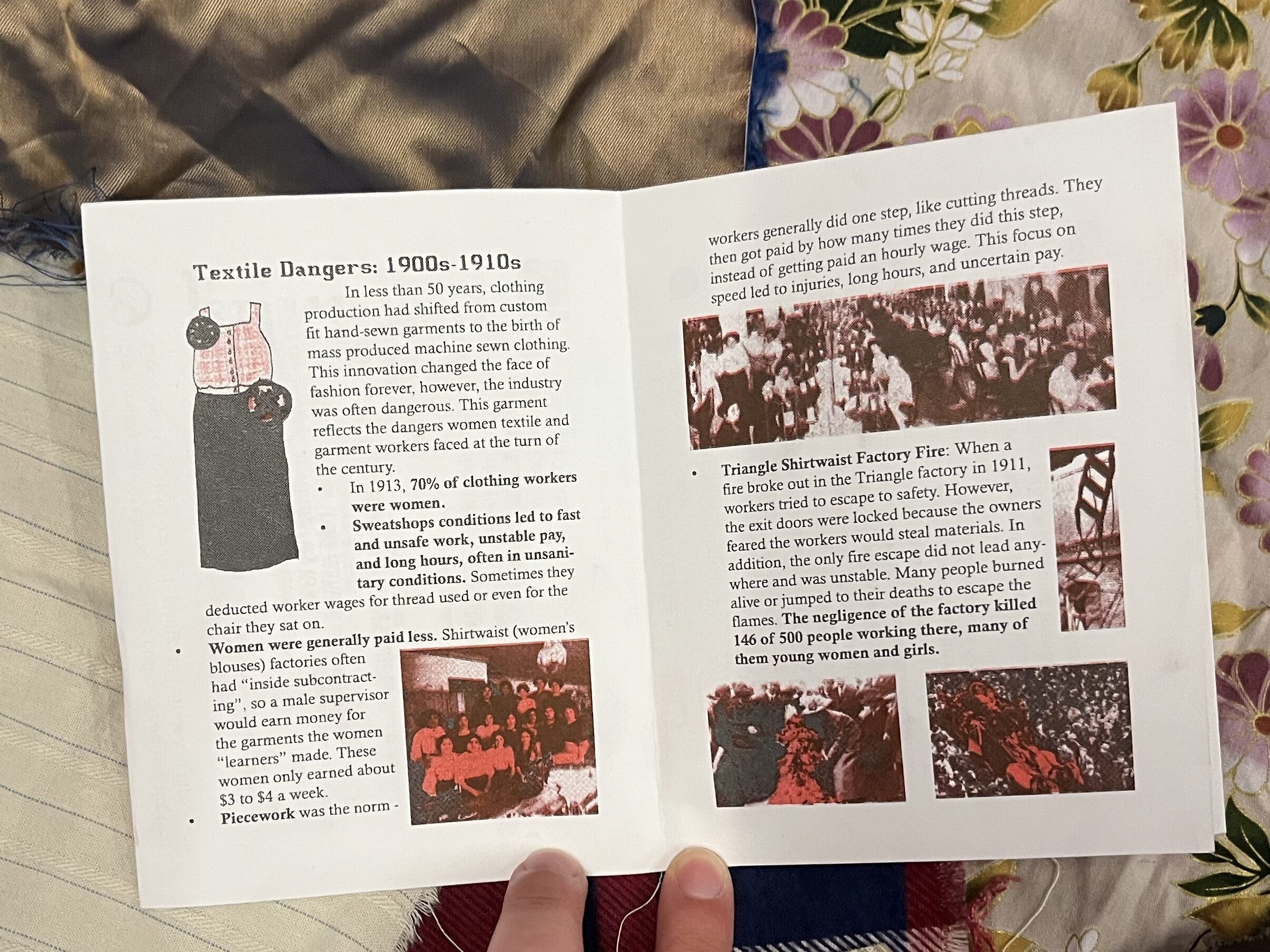
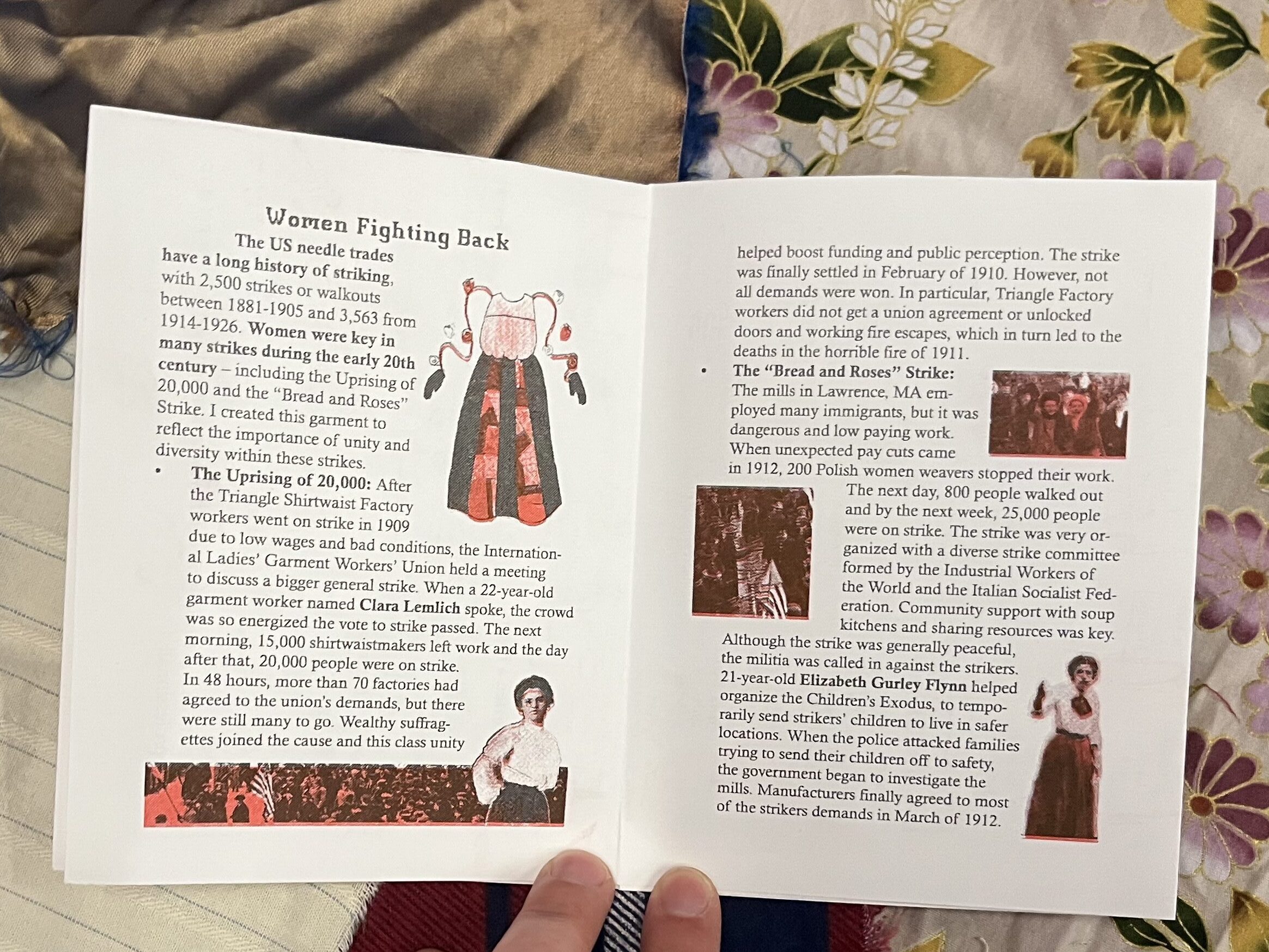
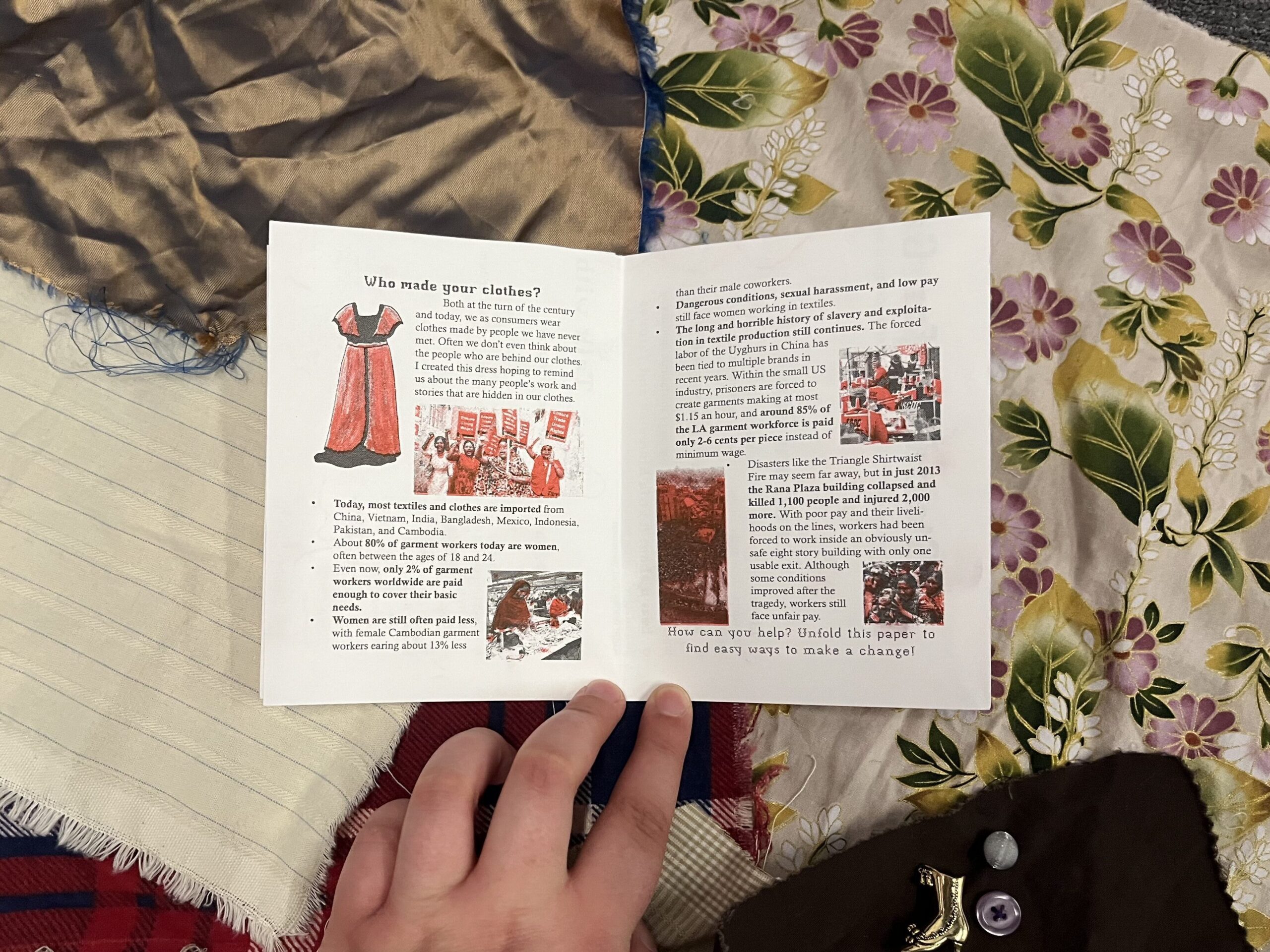
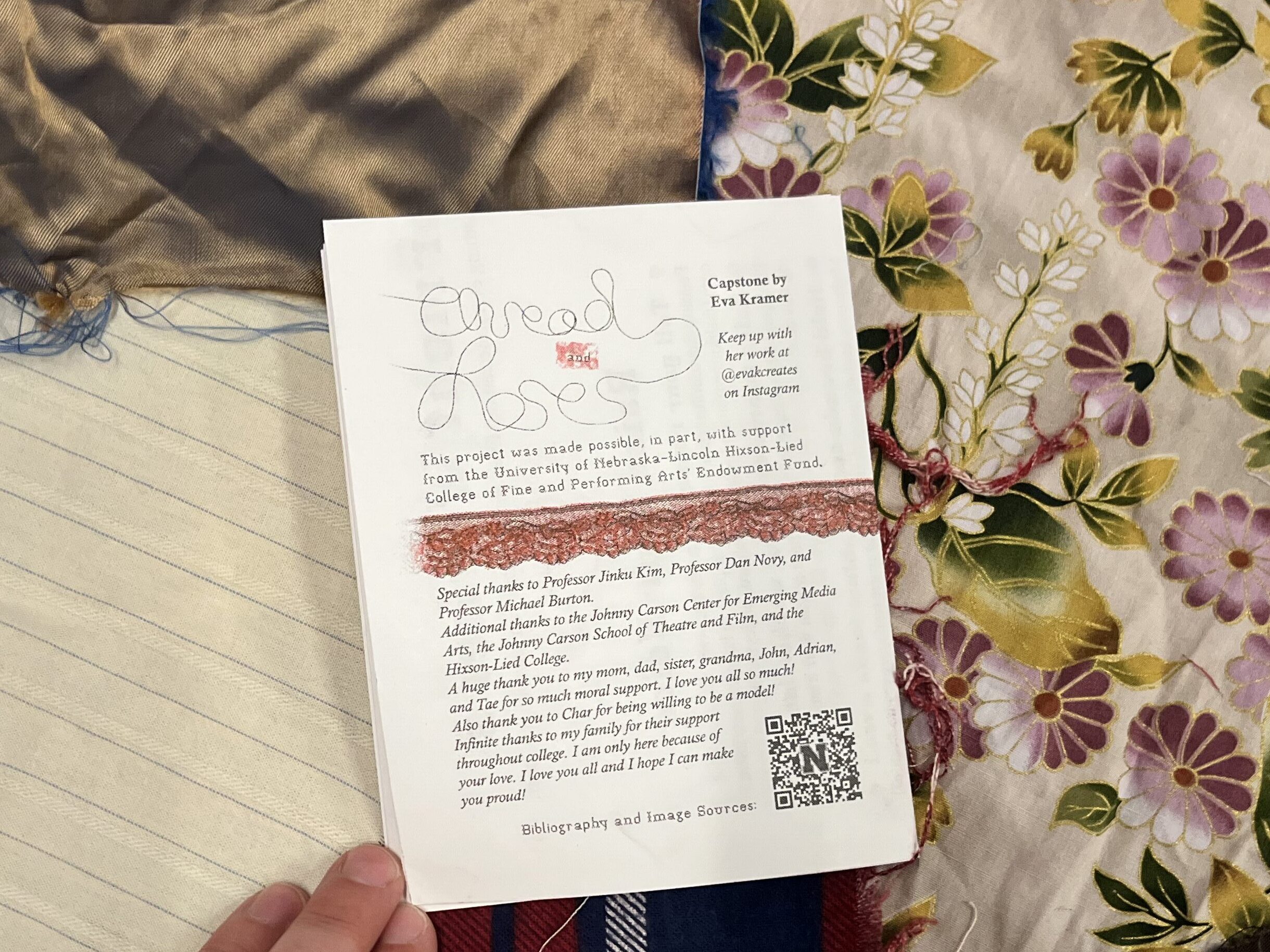
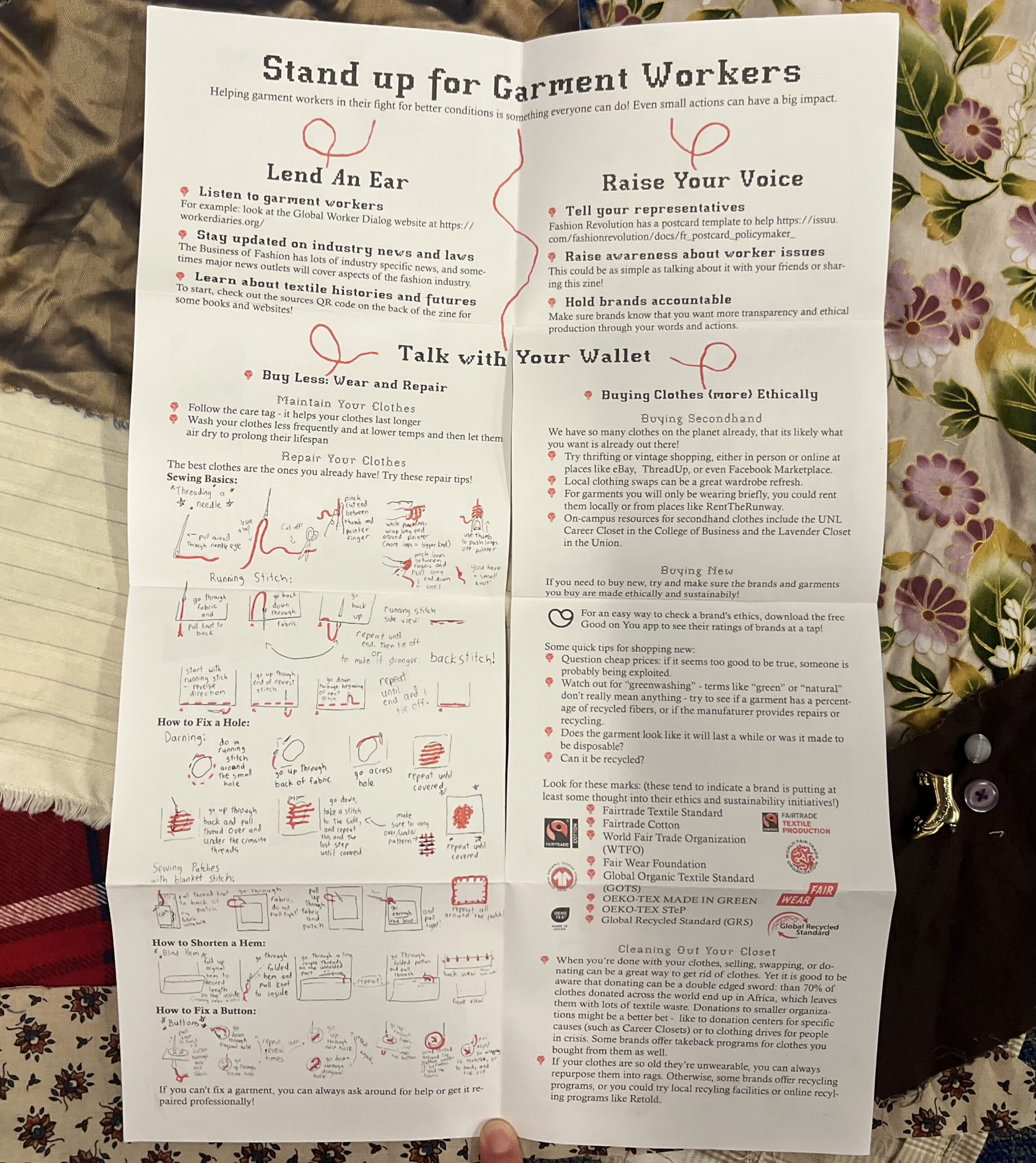
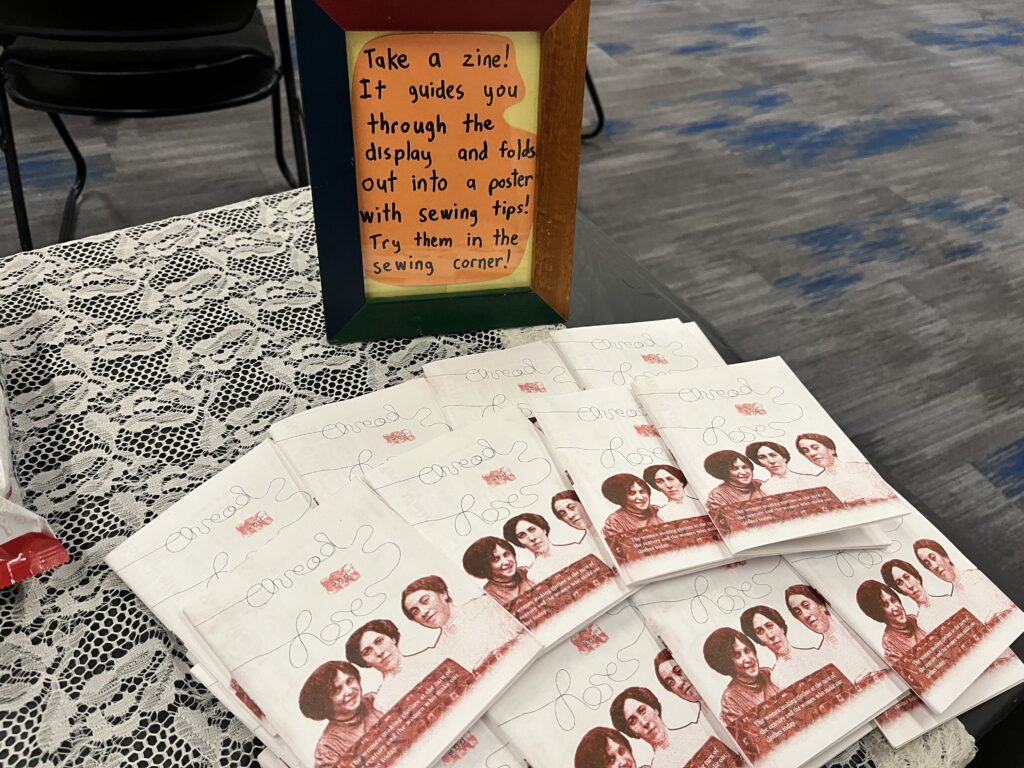
I did a lot of research for this project, and I felt it was vital to give the viewer a crash course on textile history in order to understand how we have gotten to this moment in fashion production. I designed and Riso printed this zine in order to give a background on the history of the garments to the audience. I also printed the back of every zine, so it folds out into a poster with tips on how you can help garment workers today. I also included hand drawn diagrams of how to do basic repairs and stitches on your own clothes.
Exhibition
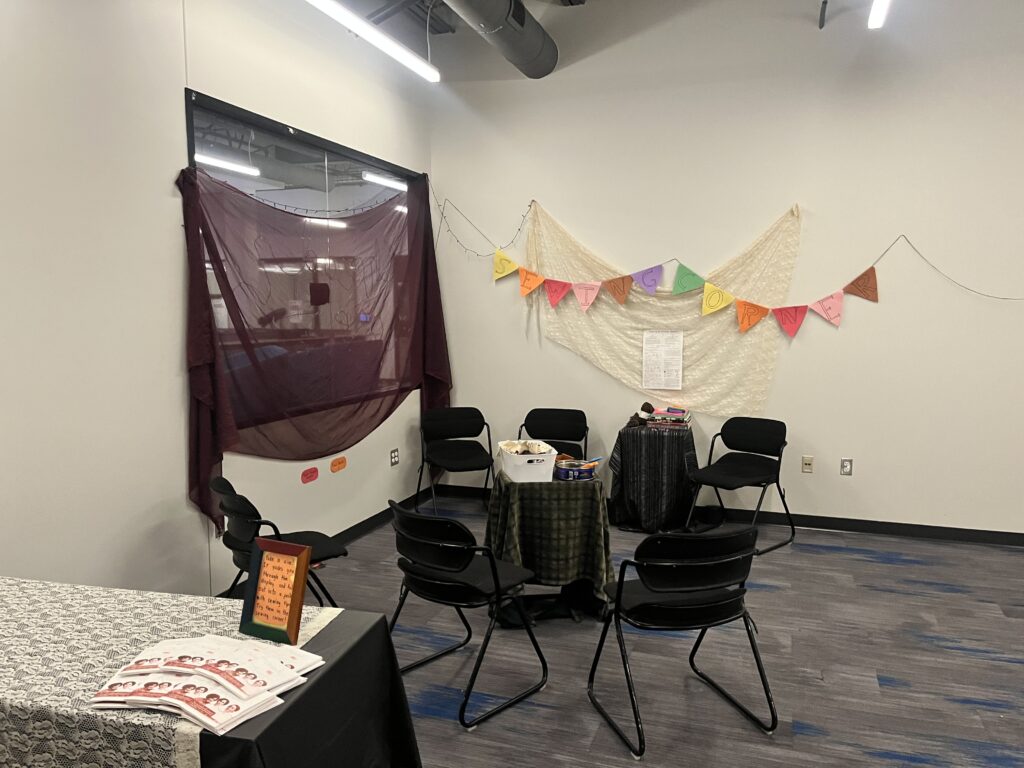
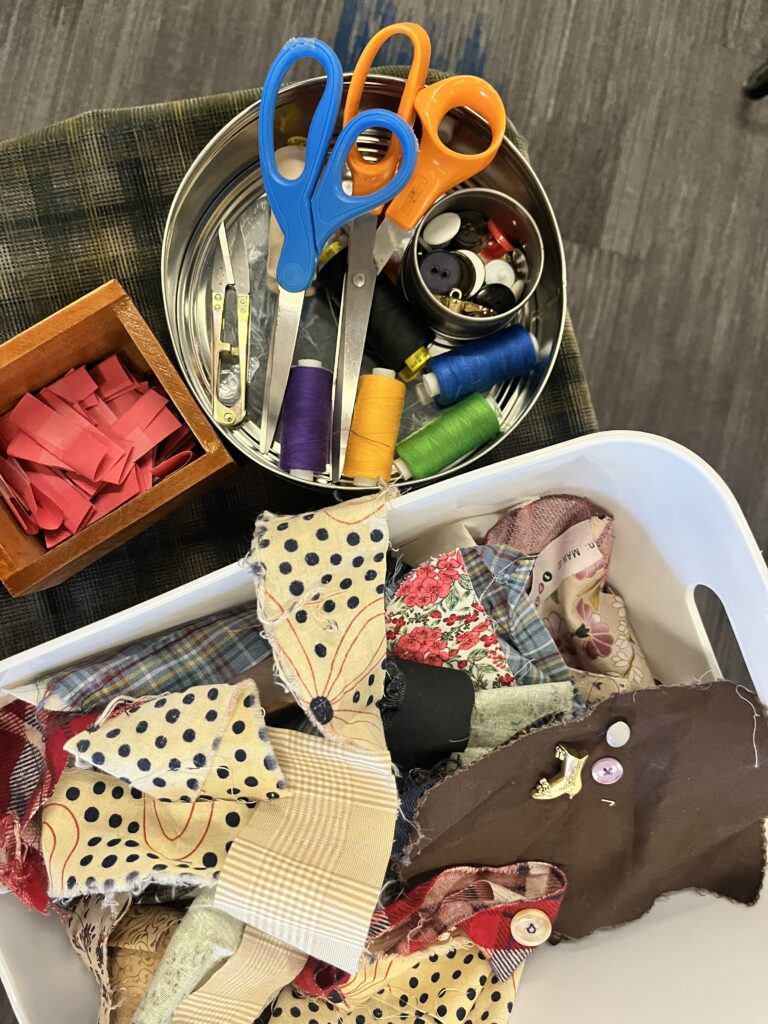
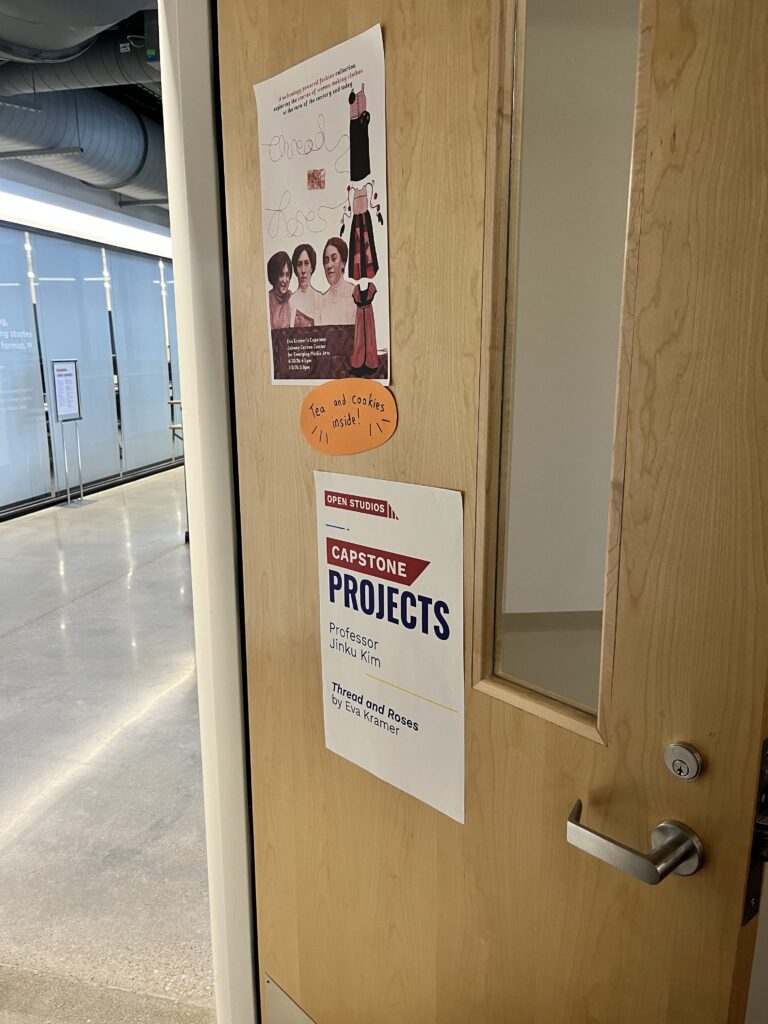
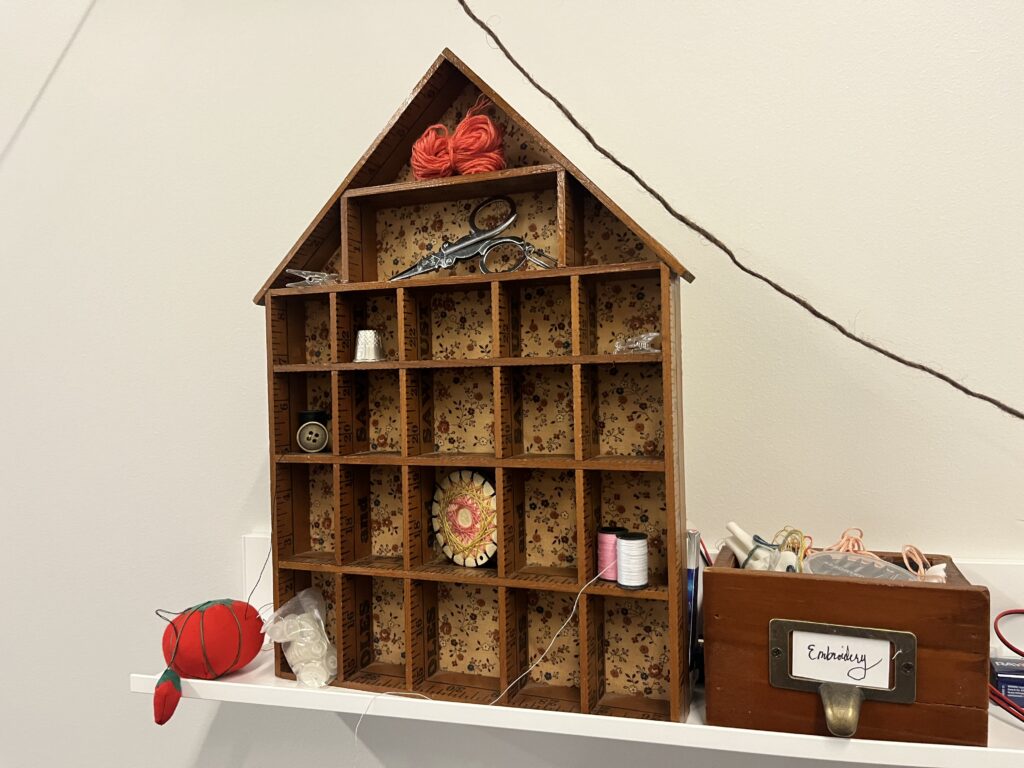
I exhibited this piece on April 30th, 2026 and May 1st, 2026 at the Johnny Carson Center for Emerging Media Arts. I wanted the space to feel cozy and inviting and to honor the women throughout history who have worked with textiles. I used yarn to connect the three garments and give the audience a direction through the exhibit. My sister and I modeled two of the garments and the third was displayed. I also had a sewing and fiber crafts circle where viewers could sit and practice the sewing tips contained on the back of their zines.
Poster image credit to the Kheel Center. Other sources and image credits available here: https://go.unl.edu/thread_roses_zine_sources